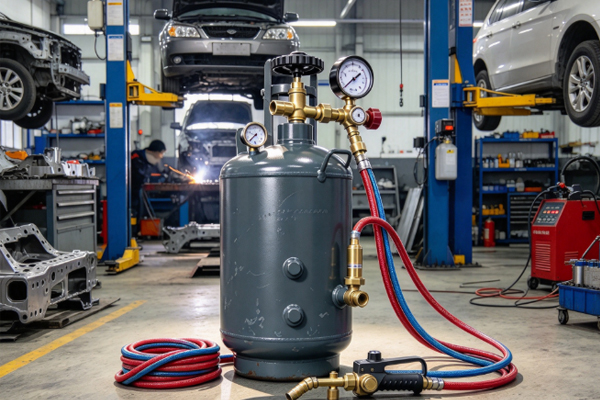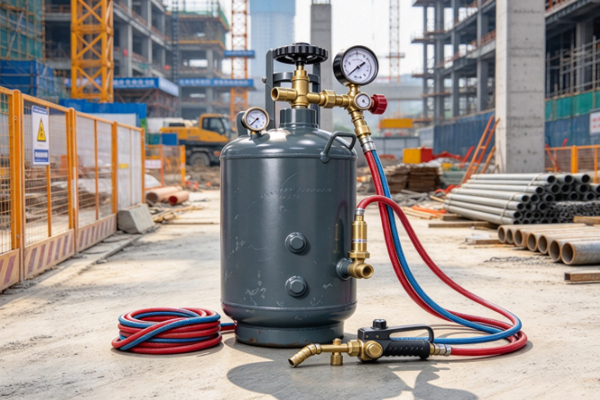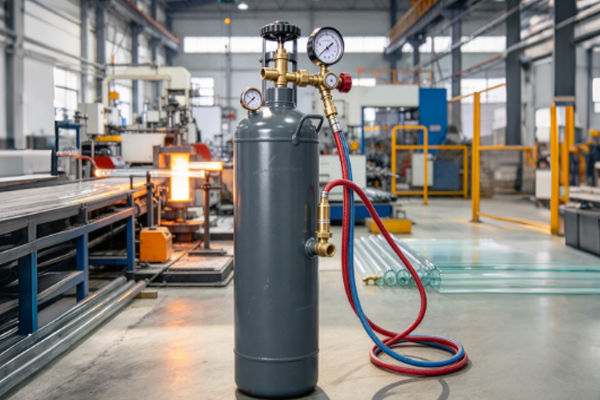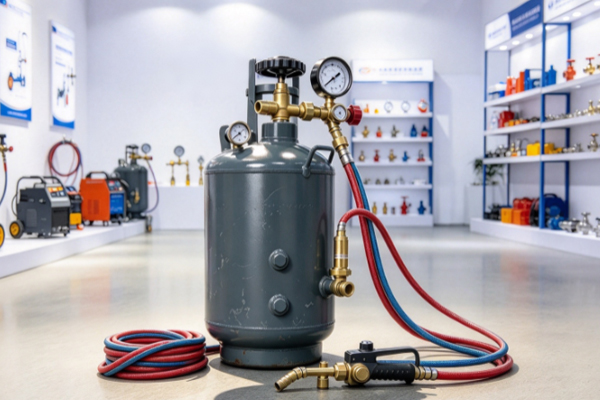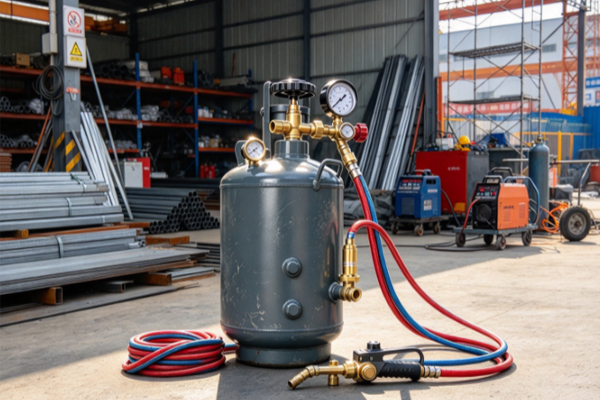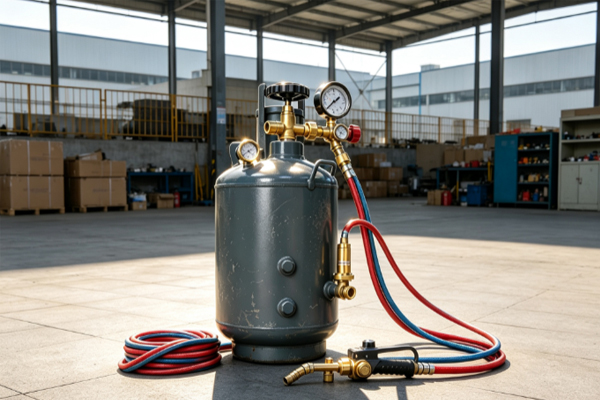
In the industrial gas application field, acetylene is widely used in welding, cutting, and metal processing due to its high-temperature flame characteristics. During the actual selection process, many companies often have a common question: Is a larger acetylene storage tank always better? At first glance, a larger capacity seems to mean more stable gas supply and fewer replacement cycles. However, in real applications, this assumption is not entirely correct. The selection of an acetylene storage tank must comprehensively consider safety, application scenarios, cost structure, and installation conditions, rather than simply pursuing “larger capacity.” Proper matching is the key to improving efficiency and safety.
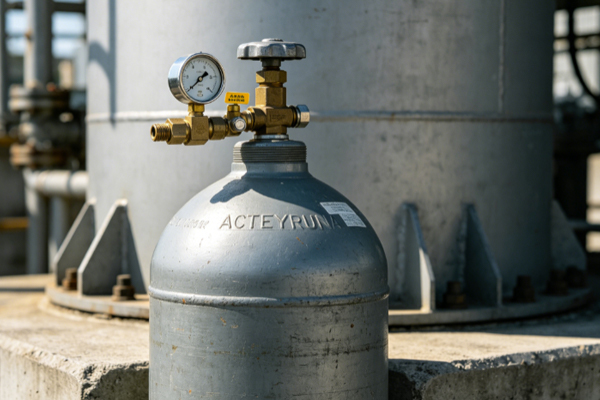
Acetylene Storage Tanks Are Not Always Better When Larger: Key Reasons
In many companies’ perception, a larger tank means a more stable system. However, from both engineering safety and practical application perspectives, this understanding is biased and must be evaluated based on risk and operating conditions:
- Increased safety risks: the larger the capacity, the higher the stored energy, and the greater the potential impact in case of leakage or accident
- Higher installation requirements: large tanks require stricter conditions in terms of building height, ventilation, and load-bearing capacity
- Increased investment cost: not only higher equipment cost, but also additional safety systems and supporting facilities
- Reduced flexibility: large tanks are difficult to move and not suitable for multi-station or distributed operations
Therefore, large-capacity acetylene storage tanks are not suitable for all enterprises.
Different Tank Sizes for Different Gas Consumption Scales
In actual production environments, different gas consumption levels require different configurations to avoid waste or insufficient supply:
- Small-scale operations: repair workshops and small processing shops can use small cylinders
- Medium production environments: machinery factories and welding workshops are better suited for medium tank systems
- Large-scale continuous production: steel structure manufacturing and shipbuilding industries require large tanks or centralized gas supply systems
The key principle is “right-sized selection,” not “bigger is better.”
Hidden Problems and Costs of Oversized Tanks
In many cases, companies focus only on gas supply capacity while ignoring long-term operational costs and management burdens, which become more significant over time:
- Wasted space: large acetylene storage tanks occupy significant floor area and affect workshop layout
- Higher maintenance costs: inspection, maintenance, and safety checks are more expensive
- Increased management complexity: stricter safety systems and operating procedures are required
- Limited efficiency improvement: if gas demand is low, large capacity advantages are not utilized
From a long-term operational perspective, over-sizing actually reduces overall cost efficiency.
How to Scientifically Choose Acetylene Storage Tank Size?
A proper selection method should be based on real production needs and future development plans rather than a single parameter:
- Calculate peak gas consumption instead of average usage
- Evaluate operational continuity requirements to avoid interruptions
- Consider factory space and future expansion possibilities
- Balance safety regulations with appropriate redundancy
- Prefer scalable or modular systems
Through multi-dimensional evaluation, extreme oversizing or undersizing can be avoided.
Optimal Configuration Suggestions for Different Scenarios
In practical industrial applications, optimal configurations vary significantly across industries, and proper matching ensures full equipment performance:
- Maintenance-oriented enterprises: lightweight, small-capacity tanks for better mobility
- Small and medium factories: medium tanks or multi-cylinder systems for stability
- Large manufacturing enterprises: centralized gas supply systems for efficient management
Proper matching of scenarios is essential to fully realize the value of acetylene storage tanks.
The selection of acetylene storage tanks is not simply a matter of “the bigger, the better,” but a systematic decision involving safety, efficiency, and cost. Only by scientifically matching real working conditions can stable operation be ensured while improving efficiency and reducing long-term operational pressure. Zhongcheng Gas Cylinde provides multi-specification acetylene storage tank solutions to meet stable gas supply needs across various industrial applications.