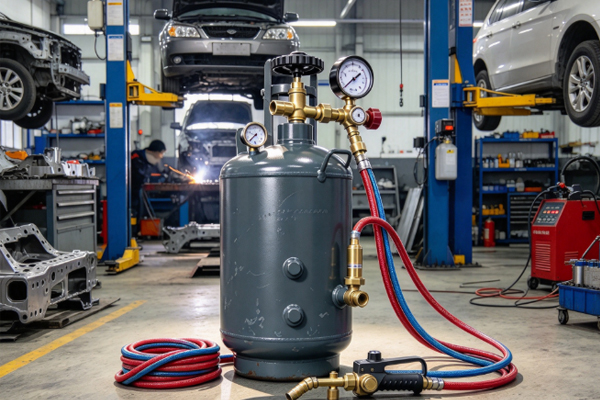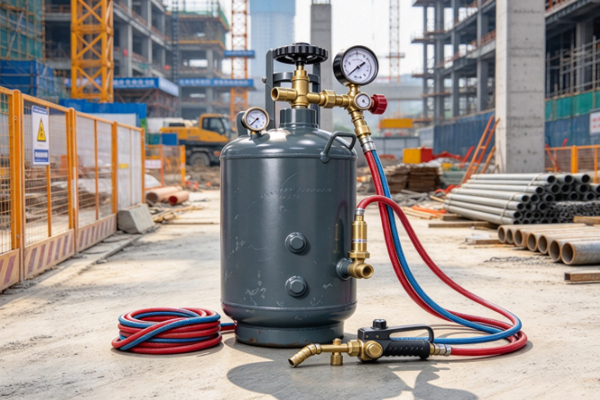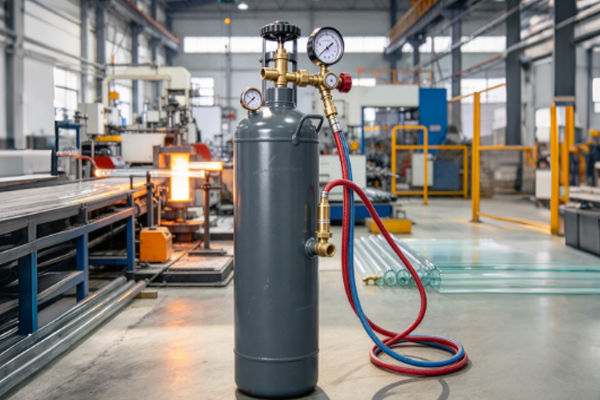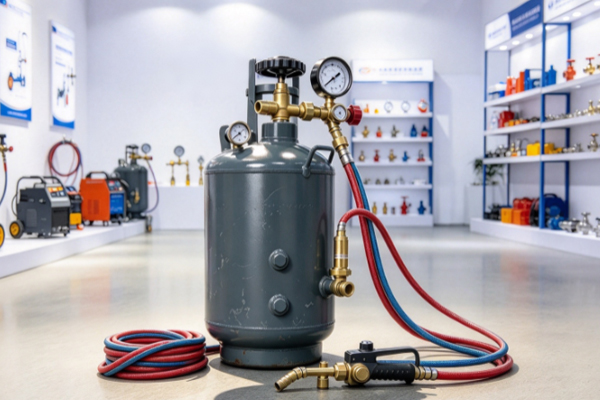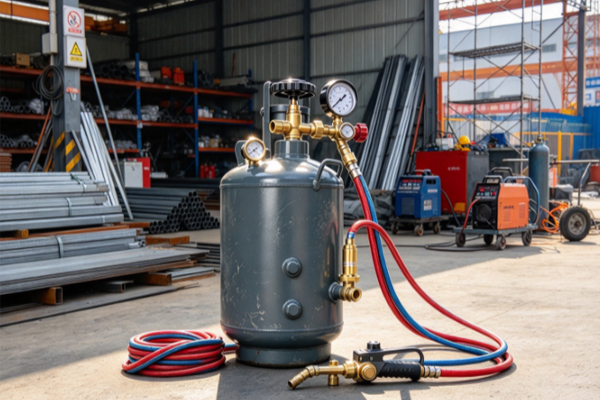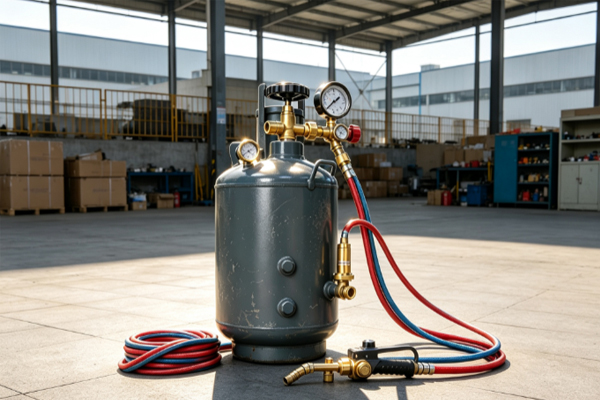
After equipment arrives on site, many enterprises tend to focus on getting production started as quickly as possible, while the installation stage is often compressed. On the surface, standard installation and casual installation may seem to differ only in construction methods, but in practice they affect the operating stability of acetylene tanks, the efficiency of later maintenance, and the cost of on-site management. For industrial gas supply systems, installation is not simply about placing and connecting equipment; it is about organizing layout, acceptance, inspection, maintenance, and responsibility in a clear way. When installation is done properly, later use becomes smoother; when installation is done carelessly, problems often emerge in clusters after production begins.
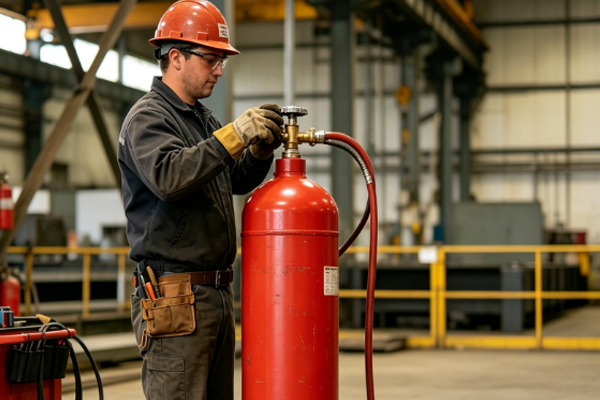
Where Is the Difference Between Standard Installation and Casual Installation?
Different installation methods usually have a direct impact on how smoothly the equipment can be used later and how difficult it is to manage.
Is the Initial Plan Complete?
Standard installation generally does not begin immediately. Instead, it first organizes the acetylene tank installation plan based on site conditions, usage requirements, and future management goals. It comprehensively considers space, workflow, and maintenance access, making equipment placement, personnel movement, and later servicing more convenient. It also incorporates expansion, inspection, and component replacement convenience into the planning stage in advance, minimizing situations where insufficient space or inconvenient operation is discovered only after commissioning. At the same time, it uniformly plans equipment placement, piping routes, and labeling positions, making the entire system clearer from a management perspective. Casual installation is more like a temporary fix—placing equipment wherever it is convenient and connecting it wherever it is easy. Adjustments later become passive. The more detailed the initial plan, the easier later operation and management will be.
Are the Construction Details Consistent?
Installation quality is often hidden in the details. What truly creates the gap is usually not the overall direction, but whether each construction step is executed according to a unified standard.
- Standard installation has a clear process and explicit node acceptance, with corresponding inspection requirements for each construction stage, ensuring the equipment remains under control from arrival to commissioning.
- Piping connections, fixing methods, and labeling management are more consistent, making the site look neater and reducing errors and confusion during actual operation.
- Site records are complete and responsibility boundaries are clearer. If problems arise later, they can be traced quickly to specific stages, reducing disputes and repeated troubleshooting time.
Common problems with casual installation are scattered details and loose standards. They may not show obvious issues in the short term, but they tend to appear after the system has been running for a while. The more consistent the construction details are, the more stable the equipment will perform later.
What Problems Can Casual Installation Cause?
If installation lacks standardization, problems in later use are often amplified little by little.
Higher Probability of Rework
After a rushed installation, many tasks that could have been completed in one go often turn into repeated adjustments and reconstruction after commissioning.
- If the equipment location is unsuitable, it may need to be moved again, increasing labor and time costs while also affecting the originally planned production schedule.
- If the piping layout is not smooth, later modifications become more labor-intensive. Many tasks that could have been completed once end up being dismantled and redone, significantly reducing overall efficiency.
- Once rework occurs on site, both the schedule and labor requirements are extended, and the enterprise also bears additional shutdown and coordination pressure while waiting for corrections.
For enterprises, rework is not just about spending more money; it also disrupts production arrangements. The more casual the installation stage is, the greater the risk of later rework.
Maintenance Becomes Less Convenient
When equipment is installed properly, maintenance personnel can operate more easily, and inspection, repair, and handover become smoother without frequent obstacles in daily management.
- Clear inspection points make routine checks more time-efficient, allowing staff to complete inspections quickly along a fixed route without repeatedly searching for equipment locations.
- Sufficient maintenance space makes problem handling more direct, and abnormal situations can be addressed faster, reducing operational difficulties caused by limited space.
- Complete records reduce errors during handover, making equipment status, maintenance history, and past issues easier to pass on to the next shift.
Casual installation often leaves maintenance personnel unable to find, reach, or clearly see what they need. Naturally, management efficiency declines. Whether maintenance is convenient often directly reflects whether the installation was standardized.
Unstable Operating Experience
Industrial gas supply systems rely on continuity and stability. If the foundation is not properly laid during installation, various seemingly scattered but actually closely related problems are likely to appear during later operation.
- Unreasonable layout makes connection points more prone to problems, and the equipment is more likely to develop loosening, deviation, or other hidden risks during long-term operation.
- Unclear labeling makes operators more likely to misjudge situations, especially when the site is moving quickly, and incorrect judgments further increase management pressure.
- When equipment conditions are inconsistent, on-site management becomes more stressful, and managers need to spend more time confirming every detail, which naturally affects overall efficiency.
These problems may not seem obvious in daily operation, but once production pace accelerates, their impact becomes more concentrated. Operational stability is directly related to installation quality.
What Value Does Standard Installation Bring?
The significance of standardized installation is not only that the equipment is “installed neatly,” but also that later use becomes more stable and worry-free.
Makes the System More Stable
Standard installation is not about doing extra work; it is about making the system run smoothly so that equipment, piping, and on-site management all operate under the same logic. It allows the acetylene tank and related supporting facilities to better match site requirements, keeps piping and accessories consistent, and makes later inspection, adjustment, and daily management more convenient. For industrial equipment such as acetylene tanks, stability is often more important than simply getting it installed. The more stable the system is, the easier it is for enterprises to maintain continuous production.
Makes Management Easier
Once installation is standardized, later management becomes much easier, and enterprises can save a lot of effort in inspections, maintenance, and document organization.
- Inspection routes are clearer, allowing staff to complete checks along a fixed path without repeatedly searching for equipment in a complex site.
- Responsibility division is more explicit. Who is responsible for inspection, who handles maintenance, and who keeps records can all be clarified in advance, reducing later management confusion.
- Documentation is more complete, making equipment status, construction process, and maintenance records easier to preserve and more convenient for future reference and tracking.
When managing equipment, enterprises fear scattered information, disorganized sites, and problems that are difficult to trace. Standard installation helps organize these aspects in advance. The easier management becomes, the more energy enterprises can devote to production itself.
Makes Costs More Controllable
When the installation stage is solid, later expenses are easier to control, and enterprises can allocate budgets to where they are truly needed instead of constantly paying for early mistakes.
- Fewer reworks and repeated construction mean enterprises can invest more resources where they are truly needed instead of repeatedly paying for earlier mistakes.
- Fewer temporary adjustments and shutdown impacts make production plans easier to maintain, and enterprises do not need to frequently rearrange processes due to equipment issues.
- Fewer hidden risks and unexpected repairs can reduce many unforeseeable expenses over the long term, making the overall budget easier to manage.
Standard installation is like laying a solid foundation once so that later operating costs remain more stable. The more controllable the costs are, the more reasonable the enterprise’s overall investment becomes.
How Can Enterprises Tell Whether Installation Is Standardized?
During acceptance and use, enterprises can judge whether installation has truly been done properly by looking at several key points.
Check Whether the Plan Has Been Implemented
Whether there is a complete acetylene tank installation plan before installation can directly reflect professionalism, and whether the plan has truly been implemented is often more important than whether it looks good on paper.A site survey is an essential step before installation. The actual space, equipment location, and usage environment need to be fully understood, as these factors directly affect the feasibility of the overall plan. Maintenance access should also be considered in advance, with sufficient space reserved for future servicing to ensure convenient equipment management after commissioning. In addition, space for future management should be planned properly by taking possible adjustment needs into account. This helps improve the system’s long-term adaptability and ensures more efficient operation and maintenance.If the plan remains only on paper, later execution often deviates from the original intent. Whether the plan has truly been implemented is the first step in judging installation standardization.
Check Whether the Process Is Clear
The clearer the construction process is, the easier it is to manage later. Whether the process is transparent also directly reflects whether the installation team has advanced according to standards.
- Are there clear construction milestones? When each step is completed, who is responsible, and to what extent acceptance is required should all be clearly recorded.
- Are there complete acceptance records? Which stages have been confirmed and which still need adjustment should be reflected in the documentation.
- Are there explanations for abnormal handling? Were problems encountered during construction recorded and addressed in time? These details all affect later traceability efficiency.
A clear process shows that the installation was not assembled casually, but advanced step by step. Whether the construction process is transparent directly affects the enterprise’s later tracing and management.
Check Whether the Result Is Easy to Use
After installation is completed, the site condition often directly reflects whether the equipment truly suits the enterprise’s needs. The neatness of equipment placement, the compatibility between the overall layout and on-site management habits, the clarity of equipment labels, and the convenience of inspection and maintenance all indicate the quality of the installation process. A well-organized installation allows operators to quickly identify equipment status and functional positions while enabling staff to complete routine checks and maintenance efficiently. If the equipment appears messy after installation, is inconvenient to operate, or creates difficulties during inspection, it usually indicates that the installation process has not fully met standard requirements. The actual usability of the equipment becomes an important indicator for evaluating installation quality.
The difference between standard installation and casual installation is not just a difference in construction methods. It also affects equipment performance, maintenance costs, and enterprise production efficiency. As an industrial gas supply device, an acetylene tank needs to be planned reasonably and managed professionally according to actual requirements in order to deliver better value. Zhongcheng Gas Tank provides professional acetylene tank and industrial gas supply solutions, helping enterprises optimize equipment configuration and achieve stable, efficient industrial gas usage needs.