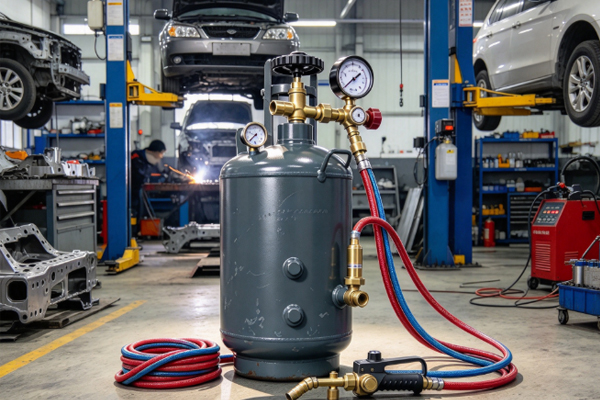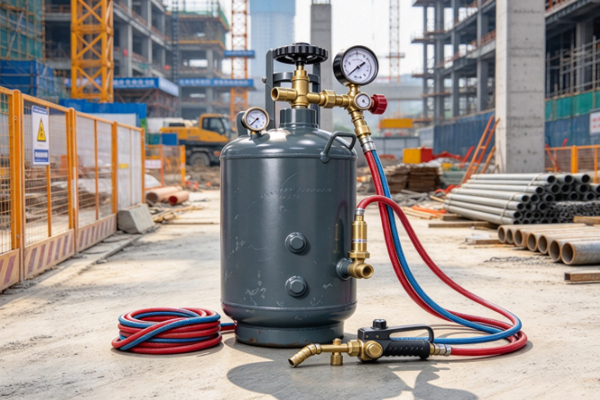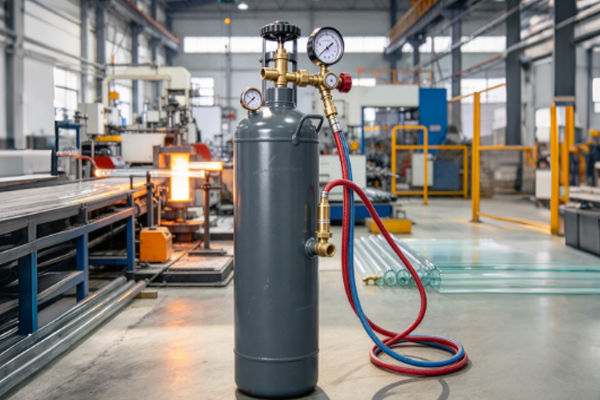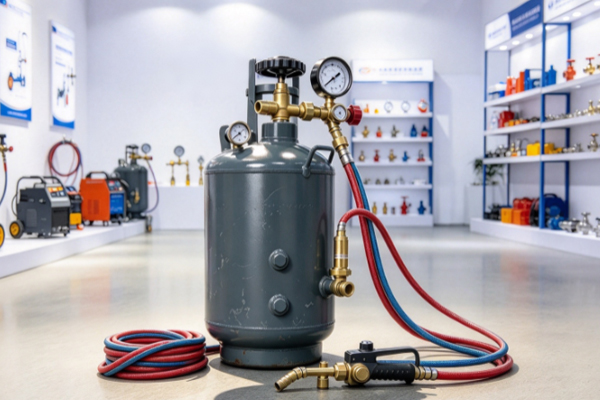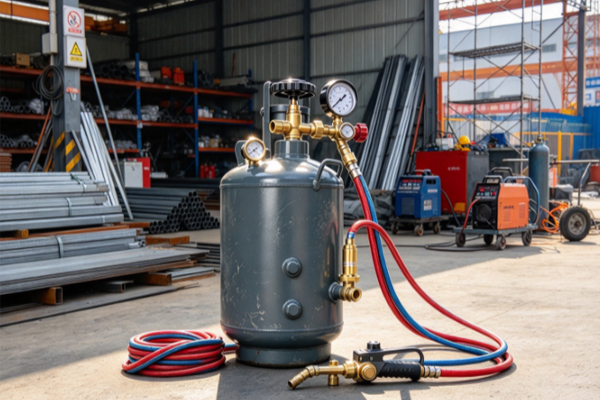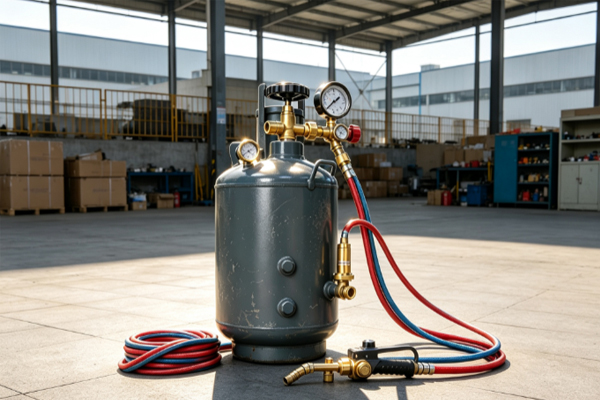
After an acetylene tank enters the site, many enterprises focus on getting production started as quickly as possible, and the installation stage is often compressed. In industrial gas supply scenarios, installation is not just about placing the equipment in position; it also involves ventilation conditions, fixing methods, inspection routes, signage settings, and subsequent management. What looks like only a construction detail can actually affect the likelihood of leaks, misoperation, collisions, and other risks. If hidden dangers are to be controlled at the source, standardized installation is usually an unavoidable step.
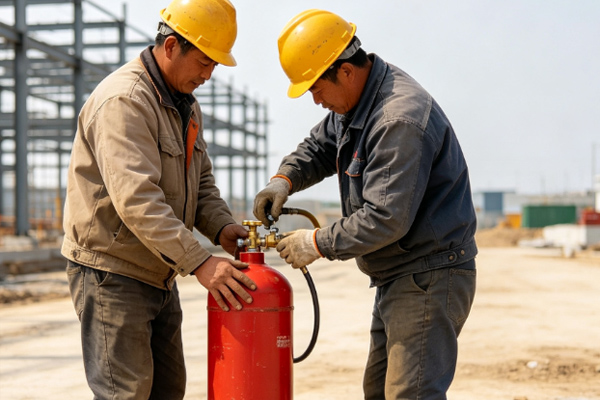
The Relationship Between Acetylene Tank Installation and Safety Incidents
Installation standards are closely linked to on-site risk control, and whether site management can proceed smoothly is often already determined at the installation stage.
Reasonableness of the Installation Location
If the placement of the acetylene tank is not chosen properly, on-site risks will be amplified, and this impact usually does not appear immediately but accumulates gradually during continuous use.
- If it is placed near heat sources, passageways, or high-frequency work areas, external interference will increase, and the equipment will be more easily affected by personnel activity and environmental changes.
- When the space is too cramped, inspection personnel will find it inconvenient to approach and check the equipment, and emergency handling after abnormalities occur will also be restricted, reducing on-site response efficiency.
- When the layout lacks clear zoning, personnel movement and equipment management are more likely to interfere with each other, making miscontact, misjudgment, and disorder more likely during daily operations.
The installation location is not just a matter of simple placement; it is the starting point of safety management. Whether the site selection is reasonable at the beginning often directly affects the subsequent on-site order.
Adaptability of Site Conditions
Acetylene tanks have clear requirements for the site environment. During installation, it is not enough to see whether the equipment “fits”; it is also necessary to determine whether the site is suitable for long-term stable use.
- When ventilation conditions are insufficient, gas management pressure will increase, and poor air circulation will make risk control more passive.
- When the ground is uneven or the equipment is not fixed properly, stability will be affected, and during long-term operation, offsetting, shaking, or uneven stress is more likely to occur.
- When lighting, signage, and passage arrangements are inadequate, daily inspections become difficult, and inspection, recording, and emergency response will also be hindered.
The more the site conditions match the usage requirements, the easier safety management is to implement, and the less likely the enterprise is to repeatedly adjust due to environmental issues during later operation.
What Safety Hazards Can Be Amplified by Improper Installation
If the installation stage lacks unified standards, many problems will not be exposed immediately, but will gradually accumulate during later use, and by the time they are discovered, they often already affect site management.
Insufficient Maintenance Space
If enough space is not reserved during installation, later management will become passive. Inspection personnel will not easily be able to approach the equipment to check its condition, and many details can only be judged indirectly, affecting inspection accuracy. When abnormalities are discovered late, the response window will be compressed, and small problems that could originally have been controlled quickly may evolve into more complex on-site risks. During repairs and component replacement, on-site coordination pressure will be greater, and related work often requires additional space rearrangement, thereby affecting the overall production schedule. Many hidden dangers do not appear suddenly; they are exposed only after long-term accumulation, and insufficient maintenance space is a very typical example.
Confused Signage and Procedures
After acetylene tank installation is completed, if on-site signage is unclear, operational risks will increase significantly, especially in scenarios involving multiple people working together and frequent handovers.
- Personnel will not easily be able to quickly identify the equipment status, and when abnormalities occur, it will also be difficult to judge in time what measures should be taken.
- During shift handovers, information transmission is prone to deviation. If the situation left by the previous shift is not clearly recorded, the next shift may continue operating with incomplete information.
- In emergencies, judgment and response efficiency will decline. On-site personnel need more time to confirm the equipment and procedures, which may cause them to miss a better handling opportunity.
Clear signage and procedures can make site management more orderly and help each position form a unified understanding when dealing with the equipment.
Improper Connections and Fixing
If installation details are not handled properly, hidden dangers are often left behind during later use. These problems may not be obvious on the surface, but they have a major impact on long-term operation.
- If the equipment is not fixed firmly, stability will be affected, and slight vibration, external impact, or environmental changes may gradually increase the risk.
- If the connection methods are inconsistent, inspection and maintenance become more difficult, and management personnel will also find it harder to quickly determine the source of a fault during troubleshooting.
- During long-term operation, problems such as loosening, offsetting, and wear are more likely to occur. Situations that could have been avoided through standardized installation may later require repeated handling.
Seemingly minor construction differences often affect the safety performance of the entire system. If enterprises ignore these details, later management pressure usually continues to increase.
What Standardized Installation Can Bring to Safety Management
Standardized installation is not only a construction requirement, but also a foundation for later management. Whether many safety management actions can be carried out smoothly is often related to the quality of the initial installation.
Making Risk Points Clearer
Standardized installation is not about making the equipment look neat; it is about making risks easier to identify so that management personnel can detect problems more quickly in daily work. When the equipment layout is more reasonable, inspection routes become clearer, and personnel are less likely to miss key areas during checks; when signage is more consistent, on-site judgment becomes more intuitive, and operators can more quickly understand the equipment status and management requirements. Management personnel can also more easily detect abnormal changes. Even slight offsetting, loosening, or environmental changes can be identified earlier. The clearer the risk points are, the easier it is to move safety management forward, and the easier it is for enterprises to control problems at an early stage.
Making Management Actions More Stable
After standardized installation, enterprises will find daily management easier, and many matters that originally required repeated coordination will become smoother.
- Inspection, recording, and handover become more convenient, and on-site personnel are less likely to face additional burdens due to a disordered layout when carrying out management actions.
- Responsibility division becomes clearer, problem tracing becomes easier, and when abnormalities occur, it is easier to identify the corresponding link for handling.
- On-site management is less likely to require repeated adjustments, and after the equipment is put into use, it can maintain a relatively stable operating state.
A stable installation foundation can help later management avoid detours and allow enterprises to focus more energy on production and risk control.
Several Ways for Enterprises to Judge Whether Installation Is Proper
Judging installation quality should not be based only on whether the equipment has already been put into use, but also on whether the site can support long-term management and stable operation later on.
Look at the Completeness of the Plan
Acetylene tank installation precautions should not remain at the level of verbal reminders. The completeness of the plan is very important. Only when sufficient consideration is given in advance can later implementation be easier to carry out.
- Whether a site survey has been conducted and whether the installation area’s space, ventilation, and work environment have truly been understood will all affect the feasibility of the final plan.
- Whether ventilation, passageways, and maintenance space have been considered. Only by incorporating these factors into the design can management blind spots be avoided during actual use.
- Whether there are clear acceptance standards and rectification requirements. If there is no unified standard after installation, many problems will remain in a “good enough” state.
With a plan, installation is easier to implement properly, and enterprises can more easily maintain consistent execution standards in later management.
Look at the Convenience of On-Site Management
After installation is completed, the on-site condition can reflect many problems. Truly standardized installation usually makes management actions smoother rather than making the site look increasingly chaotic.
- The equipment is arranged neatly. Neatness is not only about visual appearance; it also means the site flow and management logic are relatively clear.
- The signage is clear. Clear signage helps personnel quickly identify the equipment status and reduces the possibility of misoperation.
- Inspection and maintenance are convenient. If every inspection requires additional space coordination or route adjustments, it indicates that the installation layout may still have room for optimization.
If the site looks disorganized, later management pressure is usually not small, and many problems will continue to grow during daily operation.
Look at the Record Closure Status
Standardized installation cannot be separated from complete records. Only by retaining the construction, acceptance, and handover process can enterprises have a basis for later management.
- Keeping construction records not only helps trace responsibility, but also helps later maintenance personnel understand the installation background of the equipment.
- Acceptance issues are rectified properly. If problems are discovered but not truly resolved, hidden dangers will remain on site.
- Handover content is clearly traceable. The more complete the handover records are, the easier it is to maintain continuity in later management, and the less likely information gaps will occur.
With complete records, enterprises have a stronger basis for later management, and when problems arise, they can more quickly locate and handle them.
There is not a simple one-to-one correspondence between acetylene tank installation and safety incidents, but installation quality does directly affect the risk level. The more thoroughly details such as location, fixing, ventilation, signage, and inspection are handled, the easier it is for the site to remain stable, and the easier it is for enterprises to control hidden dangers at the source. For enterprises that need to use industrial gas supply equipment for the long term, standardized installation is not an extra cost, but part of safety management. Zhongcheng Gas Tank provides professional acetylene tank and industrial gas supply solutions to help enterprises make installation, management, and usage more secure.