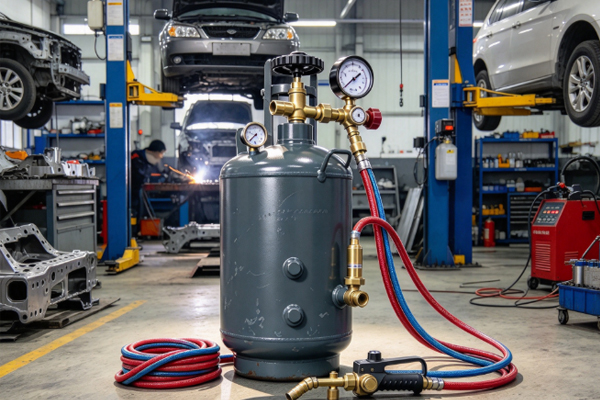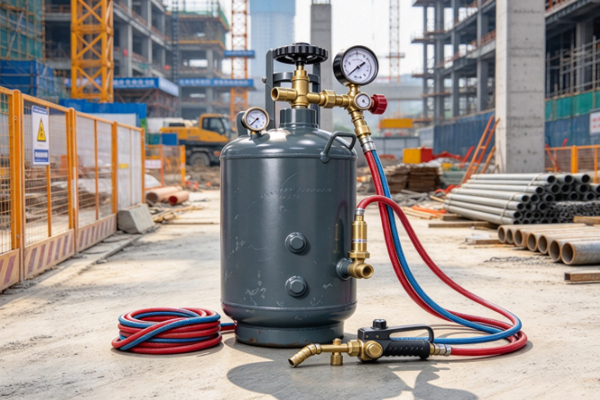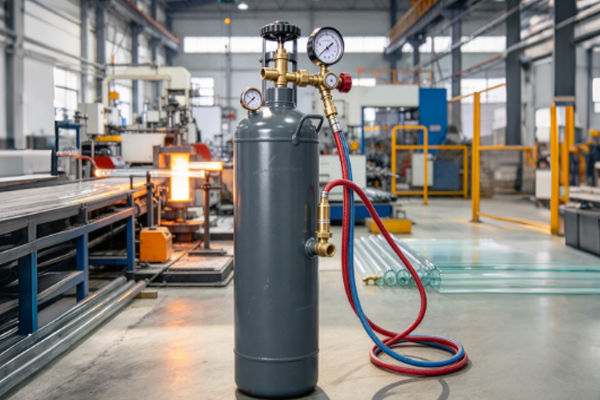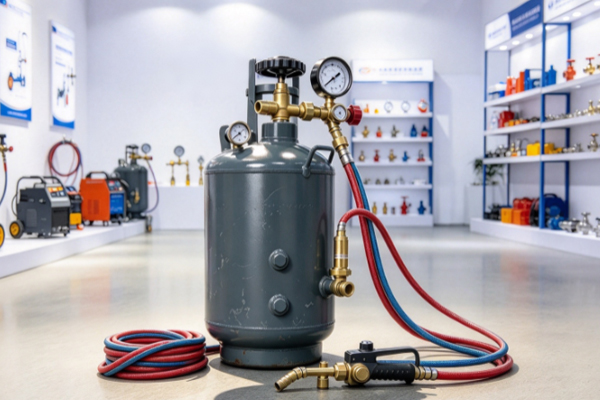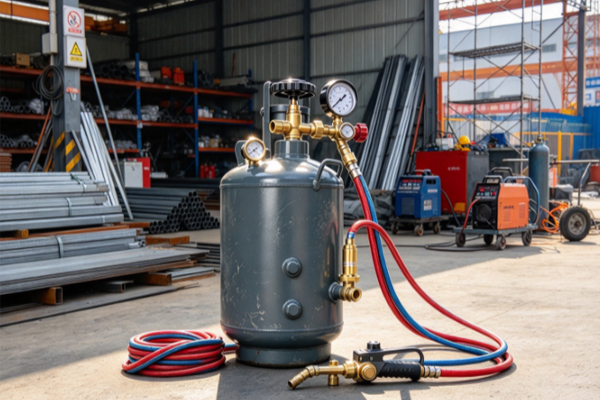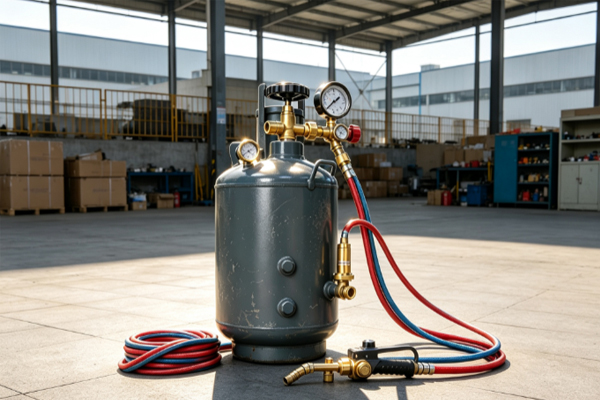
Acetylene tanks are widely used in welding, cutting, metal processing, and maintenance operations, and they are industrial gas supply equipment that is highly sensitive to environmental conditions. The installation process may seem simple, but what truly determines the later operating condition is often whether the site has been carefully assessed in advance. Factors such as ventilation, spatial layout, distance from ignition sources, and floor load-bearing capacity all directly affect the safety and gas supply stability of an acetylene tank. If systematic judgment is lacking before installation, problems such as operational inconvenience, accumulated hazards, and difficult maintenance are likely to appear later. For enterprises, site assessment is not an optional step, but a fundamental action to ensure long-term stable operation of the equipment.
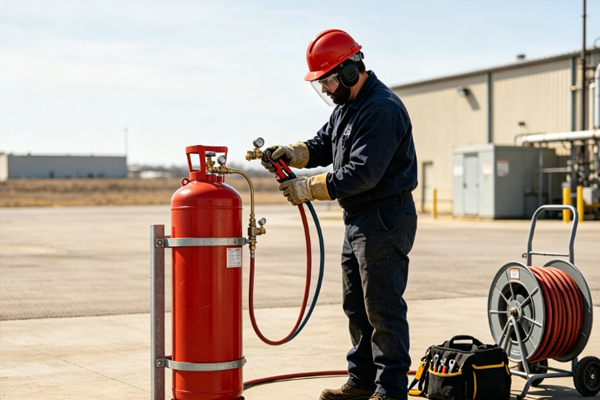
Site Assessment Determines Whether the Acetylene Tank Can Be Safely Installed
Acetylene is a highly flammable industrial gas. Once the installation environment is unsuitable, risks will continue to increase during operation. The core value of site assessment is to expose potential problems in advance and complete adjustments before the equipment is put into use.
Ventilation Conditions Directly Affect Gas Safety
If the area around the acetylene tank has insufficient air circulation, even a small amount of leakage may accumulate locally, gradually turning a controllable environment into a high-risk area.
- Enclosed spaces are not conducive to gas dispersion. Even if the leakage volume is not large, local concentrations may rise in a short time.
- Local accumulation increases the risk of combustion, especially in high-frequency welding and cutting scenarios where hazards are more likely to intensify.
- On-site personnel may not notice abnormalities in time. By the time odor or pressure fluctuations are detected, the issue often has already reached a stage requiring intervention.
After assessment, selecting the installation location can place the equipment in a more suitable air environment, reduce the possibility of gas accumulation, and make later use more reassuring.
Distance from Ignition Sources Is Related to Accident Prevention
If the installation location of the acetylene tank is close to welding sparks, high-temperature equipment, or electrical heat sources, the risk will increase significantly. Even short-term exposure may weaken the safety margin.
- The range of flying sparks is more likely to affect the equipment, especially in areas with frequent cutting and grinding operations, where risks rise along with work intensity.
- High-temperature environments affect the condition of surrounding components. Long-term exposure near heat sources may also accelerate seal aging and accessory wear.
- Emergency response space will also be compressed. Once an abnormality occurs, personnel evacuation, equipment isolation, and on-site handling will all be restricted.
Proper site judgment allows the acetylene tank to stay away from high-risk areas, moving accident prevention to the installation stage and improving overall protection.
Site Assessment Affects the Stable Operation of the Gas Supply System
An acetylene tank is not just a gas storage container; it also plays a key role in the entire gas supply chain. Whether the site conditions are reasonable directly affects gas transmission efficiency, equipment coordination, and the continuity of system operation.
Pipeline Layout Must Rely on Site Conditions
Different sites have different spatial structures, so pipeline routing, equipment spacing, and connection methods will also vary. If the actual site is not evaluated in advance, problems such as circuit detours, poor connections, or inconvenient maintenance are likely to occur later.
- Excessively long pipelines can increase pressure loss. Gas will consume more energy during transmission, affecting the performance at the point of use.
- Too many crossings make maintenance more complicated. During later inspections, efficiency drops and the probability of operational errors increases.
- An unclear layout affects later troubleshooting. Especially in scenarios with a large number of devices, problem localization becomes more time-consuming.
Through site assessment, a smoother gas supply path can be planned in advance, making the system more stable and later maintenance more organized.
Equipment Placement Affects Operational Efficiency
The placement of the acetylene tank, pressure regulator, flashback arrestor, and related accessories all affect daily use. Proper placement is not only safer, but also makes the workflow smoother.
- Overly concentrated equipment compresses operating space, making it harder for personnel to connect, inspect, and adjust.
- Equipment placed too far apart increases management difficulty, and daily inspections and emergency handling require more time.
- Insufficient reserved space affects maintenance efficiency. Replacing parts or troubleshooting later becomes very passive.
Site assessment helps enterprises find more reasonable installation points, making equipment easier to use, workflows more continuous, and on-site management more efficient.
Site Assessment Helps Reduce Later Costs
Many enterprises ignore site judgment during the initial installation stage. When problems are discovered after the equipment is put into use, the result is often rework, relocation, and pipeline modification, with overall costs far exceeding the investment required for early assessment. What seems like a time-saving measure actually leaves risks and expenses for later.
Reduce Repeated Construction and Equipment Adjustment
If the installation location is not suitable, reconfiguration is likely to occur later. These adjustments are often not as simple as moving the equipment; they also involve pipelines, accessories, and on-site management methods.
- Equipment relocation increases labor costs. Especially in confined spaces or heavy-equipment scenarios, the moving process itself requires more coordination.
- Pipeline reinstallation extends the construction period. Once the original layout is disrupted, rebuilding usually means more time and material input.
- Production stoppages for adjustment affect normal operations. Enterprises not only bear direct costs, but may also face disrupted order schedules.
Clarifying site conditions in advance reduces unnecessary rework, allows installation to be completed in one go, and makes project progress smoother.
Improve the Long-Term Economic Efficiency of Use
A reasonable site not only makes the equipment safer, but also makes later use more worry-free. Many hidden costs are closely related to whether the installation environment is suitable.
- Maintenance frequency is lower. When the equipment is in a more stable environment, the probability of faults and abnormalities naturally decreases.
- Troubleshooting is easier. Once the site structure is clear, staff can locate problems and resolve them more quickly.
- Equipment lifespan is more likely to remain stable, reducing premature aging and performance fluctuations caused by poor environmental conditions.
In the long run, the benefits brought by site assessment go far beyond safety. It also helps enterprises control overall operating costs and makes equipment investment more valuable.
What Should Be Focused on During Site Assessment?
A truly effective site assessment is not just a quick look at the location. It requires a comprehensive judgment based on environmental, spatial, and safety conditions. Only by verifying the key points one by one can the installation plan be more reliable and later operation remain stable.
Environmental Conditions Should Include Ventilation, Temperature, and Humidity
Acetylene tanks are sensitive to environmental changes. Before installation, attention should be paid to air circulation, temperature fluctuations, and humidity levels. These factors may not be obvious, but they will continue to affect long-term use.
- Whether ventilation is smooth determines whether leaked gas can disperse quickly and also affects whether the air quality on site remains stable.
- Whether the temperature is too high affects the condition of surrounding components, especially in summer or in high-heat work areas where special attention is needed.
- Whether humidity may cause corrosion affects the service life of metal parts and connectors, increasing later maintenance pressure.
These factors may seem minor, but they affect the long-term condition of the equipment. Doing one more inspection in advance can save a lot of trouble later.
Spatial Conditions Should Include Operating and Maintenance Clearance
The installation location must not only fit the equipment, but also consider later use and maintenance. Whether the space is reasonable directly determines whether the equipment can truly perform its function.
- Whether enough operating distance is reserved affects whether personnel can maintain a comfortable and safe working posture during connection, adjustment, and inspection.
- Whether daily inspection is convenient affects inspection efficiency. The more reasonable the space, the faster problems can be found and handled.
- Whether future expansion is supported determines whether the enterprise can add equipment smoothly as business grows without major site reconstruction.
When the spatial layout is reasonable, equipment operation will not be restricted by site conditions, and management and upgrades will be more convenient.
Safety Conditions Should Include Surrounding Risk Sources
Site assessment should also focus on whether there are high-temperature sources, ignition sources, collision risks, and load-bearing issues nearby. These factors often determine whether the acetylene tank can operate in a more secure environment.
- Whether it is kept away from open flames and heat sources is one of the core standards for judging whether the installation location is suitable. Any layout close to high-risk areas must be handled with caution.
- Whether the floor is flat and stable affects the stability of the equipment after placement. Insufficient load-bearing capacity or uneven ground may create additional hazards.
- Whether necessary safety signs are in place affects whether on-site personnel can quickly identify risk areas and also influences overall management standardization.
These factors determine whether the acetylene tank can operate in a more secure environment and whether later enterprise management will be worry-free.
Conducting a site assessment before installing an acetylene tank is not only about meeting procedural requirements, but also about ensuring that the equipment is put into use in a safer, more stable, and more efficient environment. A carefully evaluated installation site can reduce hazards, lower rework, improve the overall performance of the gas supply system, and help enterprises avoid unnecessary detours in later production. Zhongcheng Gas Tank provides professional acetylene tank and industrial gas supply system solutions to help enterprises build a safer and more reliable working environment.