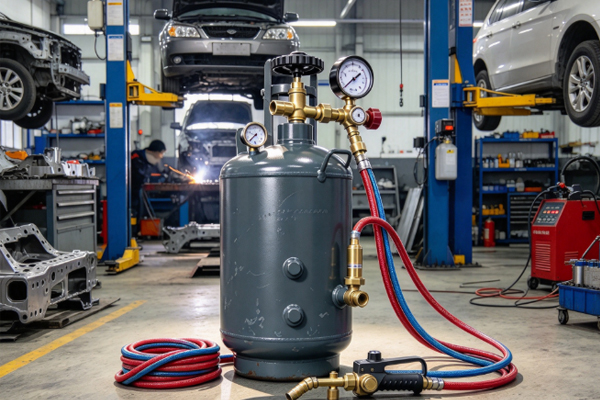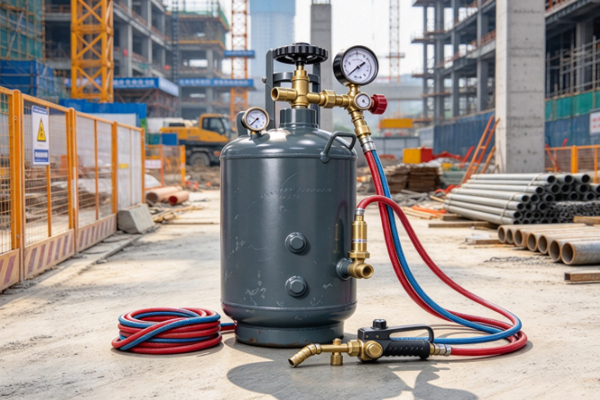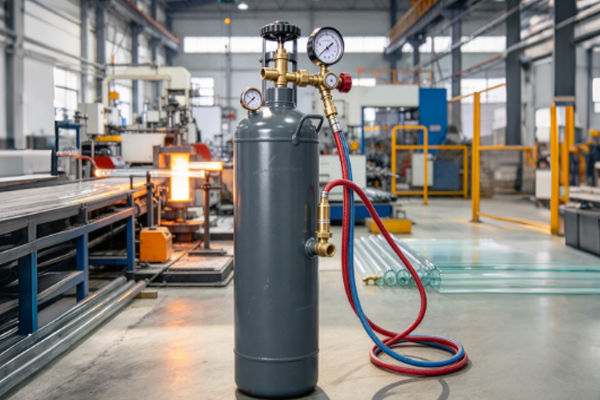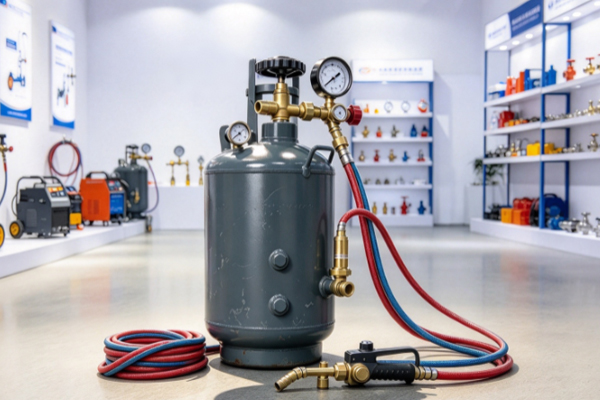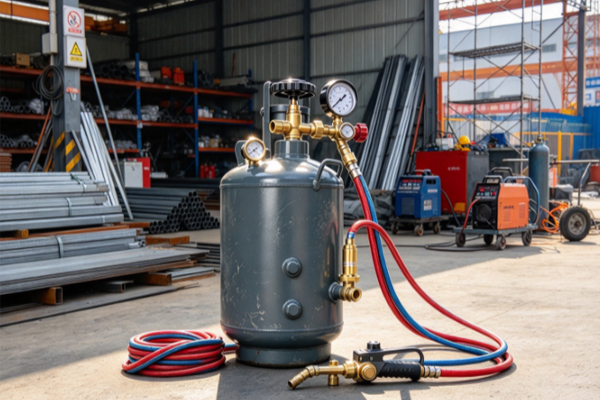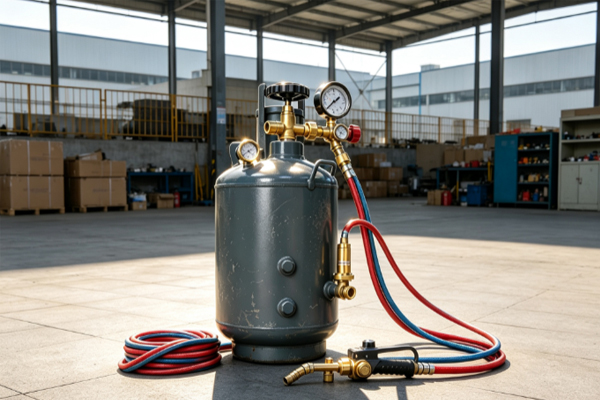
Acetylene tanks play an important role in welding, cutting, and maintenance operations inside factories, and whether the equipment can run stably often starts with the installation stage. During expansion, relocation, or renovation, many companies pay more attention to production launch speed and on-site progress, while overlooking installation details. When gas supply fluctuations, unstable flames, loose connections, and abnormal pressure begin to appear one after another, they realize how important the early construction work really was. Proper installation is not only related to whether the equipment can be put into use, but also whether it can be used stably, safely, and at low cost over the long term. For factories, acetylene tank installation is not a simple placement task, but a systematic project that requires strict execution, step-by-step confirmation, and continuous management.
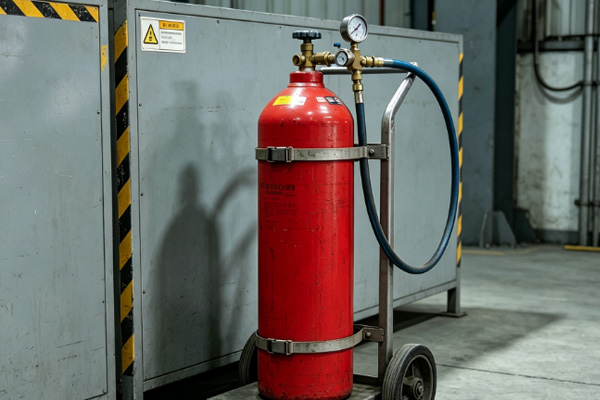
Proper Installation Is the Basis of Stable Gas Supply
If an acetylene system is expected to maintain steady output over a long period, every detail during installation must be taken seriously. Even differences in connector direction, elbow angle, or fixing method will gradually show up during later operation.
Piping Layout Determines Gas Delivery Efficiency
Piping design directly affects how smoothly the acetylene system operates. When the layout is reasonable, the gas delivery path is clearer, pressure loss is smaller, the equipment is more likely to maintain stable output during use, and operators can more easily understand the overall gas supply condition.
- A clear piping route allows gas to flow more smoothly, and the system is less likely to show obvious fluctuations during frequent use.
- When elbows and detours are reduced, pressure loss decreases accordingly, and the performance at the gas outlet is closer to the design requirements.
- If equipment location, operating space, and maintenance passages are planned in advance, later use, inspection, and maintenance will all be much easier.
A well-planned piping layout makes gas supply efficiency and daily maintenance easier, and it also helps factories maintain a stable production rhythm over the long term.
Connection Quality Affects Operational Continuity
The connections between the acetylene tank, pressure regulator, flashback arrestor, and gas hose must be firm, sealed, and properly matched. Although connectors may seem like small parts, they are actually the areas where problems are most likely to appear in a gas supply system.
- Threaded connections must be tightened properly to avoid loosening over time due to vibration, temperature changes, or long-term use.
- Sealing components must be installed correctly; improper positioning, insufficient compression, or unsuitable materials can all increase the risk of leakage.
- Valve direction and component specifications must be consistent to avoid flow errors, pressure mismatch, or operational deviations.
The more stable the connection quality, the less likely factory production rhythm will be interrupted, and the closer the equipment operation will be to the expected condition.
Proper Installation Is Directly Related to On-Site Safety
Safety management is not an optional add-on, but a core part of acetylene system installation that must be completed at the same time. Acetylene is a commonly used industrial gas, and once installation deviations occur on site, the impact is not limited to the equipment itself; it may also affect the safety order of the entire work area.
Safety Accessories Must Be Configured Correctly
The installation position, model selection, and working condition of safety accessories all affect the protection capability of the acetylene system. Flashback arrestors, pressure regulators, and pressure gauges can only truly function when installed properly.
- Flashback arrestors must be installed in the correct direction and must match the operating mode of the entire system.
- Pressure regulators must match the process parameters, meeting usage requirements while also ensuring stable output.
- Pressure gauges should be easy to read, making inspection, recording, and abnormal condition judgment more convenient while reducing misjudgment and missed checks.
When safety accessories are properly configured, the system runs with greater assurance, and factories can operate more confidently during high-frequency work.
Proper Installation Helps Reduce Hidden Risks
Factory environments are complex, with vibration, impact, heat sources, and frequent personnel movement often present around the equipment. If the acetylene tank is installed in an unsuitable location, hoses may be compressed, valves may loosen, and piping may be damaged by external force. Many hidden risks do not appear immediately, but accumulate over time during operation.
- Avoid high-temperature and strong-vibration areas to reduce interference from the external environment.
- Keep the equipment away from frequently used walkways to lower the chance of accidental contact, squeezing, and external damage.
- Leave enough maintenance space to make later inspection, adjustment, and component replacement easier and less labor-intensive.
By addressing hidden risks in advance, on-site safety management becomes more reliable, and equipment operation becomes more controllable.
The Difference Between Proper and Improper Installation Is Very Clear
Different installation methods lead to very different results in later operation, maintenance difficulty, and production performance. Many factories do not notice the difference at the beginning, but after the equipment has been running continuously for a period of time, the advantages of proper installation become increasingly obvious.
Operating Conditions Differ Greatly
With proper installation, the acetylene system maintains more stable pressure, the flame is easier to control, and operators do not need to constantly adjust parameters during use. The entire operation process also becomes smoother.
- Pressure fluctuations are smaller, the gas outlet performance is more stable, and equipment switching is less likely to cause obvious impact.
- Flame conditions are more stable, making it easier to maintain consistent processing results during welding and cutting.
- Fewer adjustments are needed, which also reduces the workload of on-site personnel.
Stable operating conditions make production smoother, and factories can more easily maintain consistency during batch operations.
Maintenance Costs Also Differ Significantly
A properly installed system is easier to maintain later. Problems are easier to detect during inspections, and component replacement is more targeted. Improper installation often leads to a situation where one issue is fixed only for another to appear elsewhere. Fault points are easier to locate, maintenance personnel can find the source of the problem more quickly, troubleshooting time is reduced, repair frequency is lower, equipment runs more continuously, production plans are easier to execute, downtime losses are easier to control, and factories gain more initiative in cost management. When the installation is solid from the beginning, later maintenance pressure is much lower, and equipment management becomes far less troublesome.
Service Life and Processing Quality Are Also Affected
If the acetylene tank and its supporting system are installed properly, component wear is more even and the overall service life is usually longer. Once gas supply becomes stable, weld seams are neater, cutting surfaces are smoother, and consistency in batch processing is higher.
- Equipment wear is more balanced, and key components are less likely to age prematurely due to localized stress or abnormal fluctuations.
- Processing quality is more stable, making welding and cutting results easier to keep at a uniform standard.
- The overall service cycle is longer, allowing the value of the equipment investment to continue over a longer period.
The higher the installation quality, the longer the equipment value can be maintained, and the more obvious the factory’s overall benefit will be.
How Should Factories Properly Install Acetylene Tanks?
To truly install an acetylene system well, construction work alone is not enough; management thinking must also keep up. Installation is not a one-time action, but a process that must be continuously controlled from planning and construction to acceptance.
Choose a Professional Installation Team
Acetylene system installation involves equipment selection, piping connection, accessory configuration, and pressure adjustment. A professional team is more familiar with standard procedures and can identify problems in advance. When choosing an installation team, it is worth checking whether they have sufficient construction experience, whether they have handled similar acetylene system installations, whether they can provide complete commissioning records, and whether they have acceptance and delivery capabilities. A professional team makes the installation result more reliable and reduces the chance of rework later.
Establish Installation and Acceptance Procedures
Proper installation cannot rely only on on-site experience; it also needs procedural support. Factories can create an installation checklist and record items such as equipment fixing, connector sealing, accessory direction, pressure testing, and trial operation results one by one.
- Equipment fixing should be confirmed item by item to avoid later operational issues caused by vibration or displacement.
- Sealing and pressure test records should be kept for future review and responsibility tracing.
- Trial operation results should be included in the acceptance process to ensure the system performs stably under real working conditions.
Systematic management makes installation quality easier to control and ensures that every construction project has traceable evidence.
Connect Installation With Ongoing Management
Many companies focus only on the effect on installation day and ignore later inspection and maintenance. After the acetylene tank system is put into use, pressure changes, sealing conditions, and accessory performance still need to be checked regularly.
- Inspect pressure and sealing conditions regularly to detect fluctuations, leakage, or abnormal wear in time.
- Monitor whether accessory performance remains normal to prevent small faults from becoming major problems.
- Combine installation, commissioning, acceptance, and maintenance into a complete process to form a sustainable equipment management system.
When installation and management are connected, the system can truly be used stably and for a long time, and factories can achieve a better balance between production and cost.
Proper installation of acetylene tanks in factories is not only about meeting equipment startup requirements, but also about ensuring more stable gas supply, higher production efficiency, and safer on-site operations. When installation quality is firmly controlled, later operation becomes easier and overall costs are easier to manage. Zhongcheng Gas Tanks provides professional acetylene gas supply solutions and technical services for all types of factories, helping enterprises achieve efficient and safe gas use.