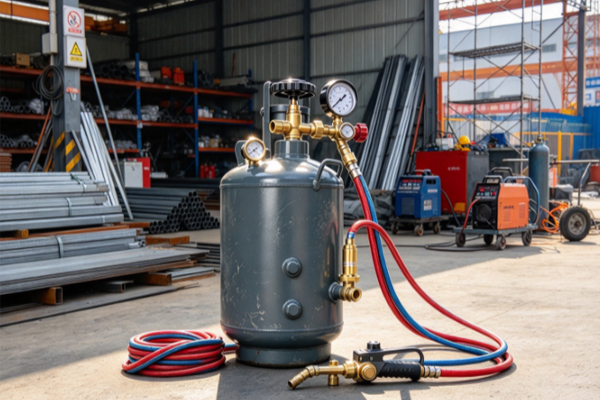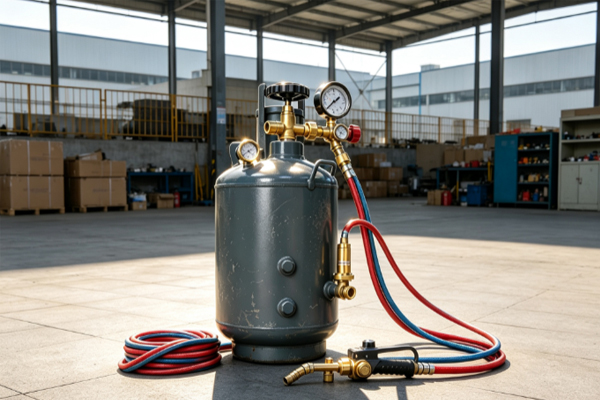
After an acetylene tank has been installed, many users want to move into production as quickly as possible, feeling that the equipment is already in place and the piping has been connected, so direct use seems more time-efficient. In actual operation, the commissioning stage often determines whether the system will remain stable later on. It is not a formalistic procedure, but a comprehensive confirmation of pressure conditions, sealing performance, valve action, and safety accessories. Many seemingly minor issues, such as slight leakage at joints, pressure fluctuations, unstable flames, or mismatched accessories, will be exposed during commissioning. For industrial acetylene systems, skipping commissioning is not cost-effective and may instead bring hidden risks into formal production.
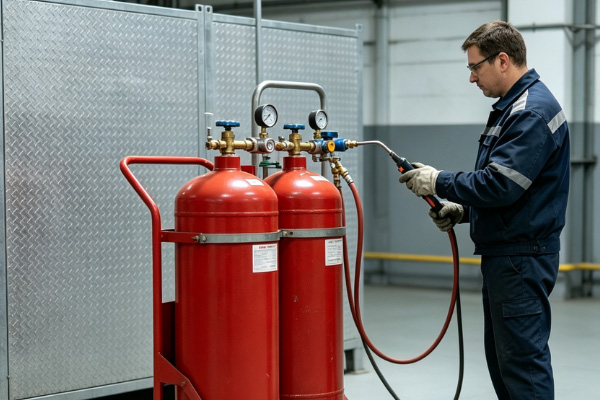
The Acetylene Tank Commissioning Stage Performs Critical Inspection Tasks
The focus of commissioning is not only to see whether the equipment can ignite, but also to confirm whether the entire system is capable of stable operation.
Operating Conditions Remain Stable
The core task of commissioning is to confirm whether the entire gas supply system can operate stably. When the equipment is first put into operation, pressure changes, gas output, and valve response all need to be observed one by one. Only when all indicators remain within the normal range can later production more easily stay consistent.
- Observe whether the gas supply pressure remains continuous to avoid sudden rises and drops that may affect welding and cutting rhythm later on.
- Check whether valve opening and closing are smooth, confirming that there is no sticking, rebound, or abnormal resistance during operation.
- Inspect whether gas output is uniform to ensure that the supply process does not become intermittent or show obvious fluctuations.
When operating conditions are stable, later production is more likely to remain consistent, and the time loss caused by frequent equipment adjustments can also be reduced.
Installation Details Are Rechecked
Many installation issues are not obvious during static inspection and become easier to reveal during commissioning. The commissioning stage is like moving the equipment from “installed” to “ready to use,” helping users promptly identify whether joints are secure, whether sealing is leaking, and whether safety accessories are installed correctly. Even slight deviations may affect gas supply stability and later operation. Commissioning acts like a pre-production verification, reducing rework and repeated repairs, and making formal production more reliable.
Skipping Commissioning Will Significantly Increase Production Risks
If the commissioning process is omitted, the equipment may appear normal on the surface, yet many hidden risks may remain in actual operation. Many problems are not easy to detect at the beginning, and once continuous production starts, handling them becomes much more difficult.
Hidden Risks May Be Brought into Production
Without commissioning, the equipment may look normal on the surface while actual operation still contains deviations. Once the system is put into use with problems, efficiency will be affected, and small controllable issues may gradually expand.
- Output pressure rises and falls unpredictably, causing unstable flame conditions and affecting operating feel and processing results.
- Unstable flame combustion may easily lead to flame deviation and increased flashback risk.
- Gas flow may not match equipment demand, resulting in insufficient supply or waste and affecting the overall operating rhythm.
Once these issues enter the production stage, handling them becomes more troublesome, requiring shutdowns for troubleshooting and potentially affecting order schedules and on-site arrangements.
Failure Probability Increases Significantly
The commissioning stage itself is an important risk-screening process. Many equipment failures do not happen suddenly, but are gradually accumulated from installation deviations, improper parameter settings, or poor accessory conditions.
- Small problems are easily overlooked and only become apparent after formal operation, increasing both repair costs and time costs.
- Parts wear faster, especially sealing components, valves, and hoses, which are more likely to age prematurely under abnormal conditions.
- System stability is affected, and fluctuations during operation force operators to make frequent adjustments, increasing management difficulty.
Detecting abnormalities in advance can reduce shutdowns and repair frequency, while allowing the equipment to be put into use in a more stable condition.
Processing Quality Is Affected
The acetylene gas supply condition directly affects welding and cutting results. When gas supply is unstable, the equipment may still work, but processing quality often shows visible fluctuations.
- Flame temperature becomes uneven, making welding heat input unstable and affecting forming results.
- Cutting surfaces become uneven, edge quality declines, and additional finishing work increases.
- Weld bead consistency decreases, making quality differences more likely during batch processing.
Only stable gas supply can make processing quality more controllable and help enterprises reduce rework and material waste.
Several Key Points Must Be Noted During Acetylene Tank Commissioning
Commissioning is not about going through the motions, but about confirming key parameters one by one to ensure the equipment truly meets production conditions. Each inspection point corresponds to a core risk in system operation and cannot be judged by appearance alone.
Pressure Parameters Must Be Kept Appropriate
Pressure control is a key part of commissioning. Acetylene systems are sensitive to pressure changes, and improper parameter settings will affect gas supply performance and equipment behavior. During commissioning, the output pressure of the pressure reducer should be adjusted, the pressure gauge reading should be checked for normality, and pressure changes should be observed to ensure there are no sudden rises or drops. When pressure is set properly, gas supply becomes more continuous and equipment operation more stable.
Sealing Performance Must Be Reliable Enough
Sealing conditions directly affect system performance. Even slight leakage may cause pressure loss, gas waste, and even safety hazards.
- Check whether there is leakage at each joint, with special attention to connection points, valve areas, and hose fittings.
- Inspect whether sealing components are installed properly, confirming that gaskets, sealing rings, and similar parts are not displaced or damaged.
- Confirm whether piping connections are secure to prevent loosening caused by vibration or operation.
Good sealing means less gas loss, safer operation, and higher overall system efficiency.
Trial Ignition and Test Operation Must Be Normal
Test operation provides a more intuitive verification of system status. Through actual ignition and short-term operation, details that cannot be seen in static inspection can be exposed.
- Observe whether the flame color is normal to judge whether combustion is stable and whether there is any abnormal discoloration.
- Check whether gas supply remains continuous, confirming that there is no gas interruption, stalling, or obvious fluctuation during operation.
- Confirm whether the equipment runs smoothly, paying attention to any abnormal noise, vibration, or operational resistance.
Through test operation, many potential problems can be discovered in advance, providing a more reliable basis for formal production.
Proper Acetylene Tank Commissioning Is More Beneficial for Later Use
A standardized commissioning process allows the equipment to enter a stable state more quickly and reduces the time spent on repeated inspections later. The more carefully commissioning is done, the more worry-free later use will be.
Prepare an Inspection Checklist First
Listing the items before commissioning makes the process smoother. A checklist not only helps operators clarify tasks, but also reduces omissions and repeated inspections.
- Verify installation quality to ensure that the equipment body, piping, and accessories have all been installed according to requirements.
- Check accessory configuration to confirm that the pressure reducer, flashback arrestor, pressure gauge, and other components are complete and compatible.
- Confirm equipment condition in advance to determine whether there is transport damage, installation deviation, or obvious abnormalities.
With a checklist, omissions are reduced, efficiency improves, and the commissioning process becomes easier to standardize.
Inspect Step by Step According to Procedure
Commissioning is not suitable for skipping steps. A clear sequence makes it easier to identify problems. Each inspection step corresponds to different risk points, and proceeding according to the process makes it easier to form a complete judgment.
- Perform a sealing test first to confirm that there is no gas leakage in the system and to avoid interference with later pressure testing.
- Then perform a pressure test to observe whether pressure changes under different operating conditions meet requirements.
- Then carry out trial ignition and test operation to verify gas supply, combustion, and accessory coordination through actual operation.
Proceeding according to the process makes commissioning results more reliable and problem localization more accurate.
Establish Acceptance Records
After commissioning is completed, records should not be omitted. Many devices perform well during initial commissioning, but changes may occur during later operation. Complete records help trace the cause.
- Save commissioning data to facilitate later comparison of pressure, flow, and operating condition changes.
- Record operating status clearly, including any abnormal phenomena, adjustments made, and handling results during test operation.
- Complete delivery confirmation to make equipment handover more standardized and to support later maintenance management.
Complete records are helpful for later maintenance and for tracking equipment status, which is very beneficial for enterprise equipment management.
The commissioning stage of an acetylene tank is not suitable to be skipped. It is an important safeguard before the equipment is formally put into use. From pressure adjustment and sealing inspection to trial ignition and test operation, every step helps enterprises detect problems in advance, stabilize system conditions, and improve processing quality. When commissioning is done thoroughly, later operation becomes more worry-free and failures become less frequent. Zhongcheng Gas Tank provides professional acetylene tank and industrial gas supply solutions, creating a safe, stable, and efficient industrial gas experience for enterprises.