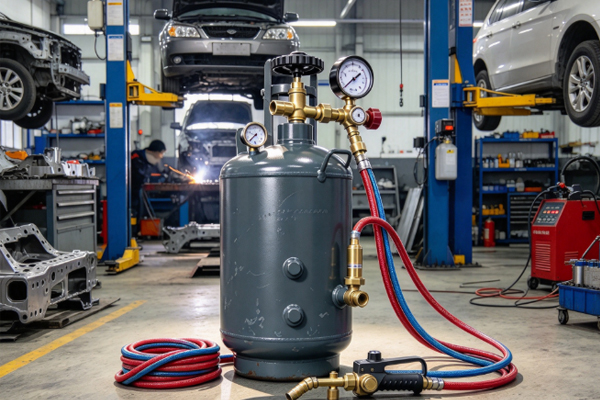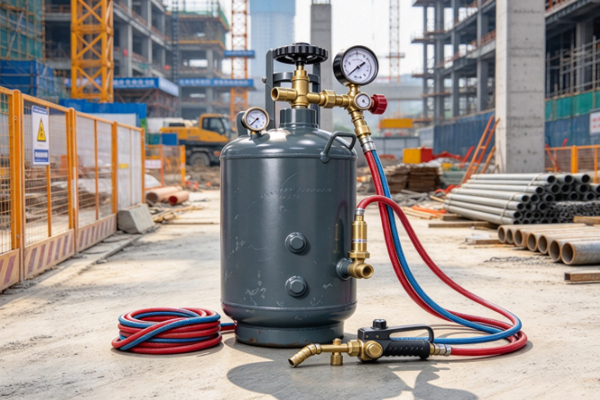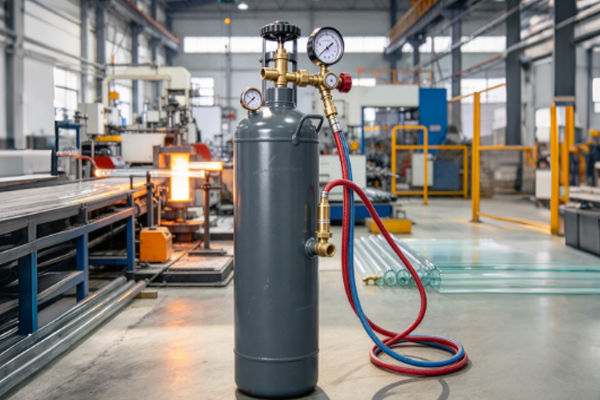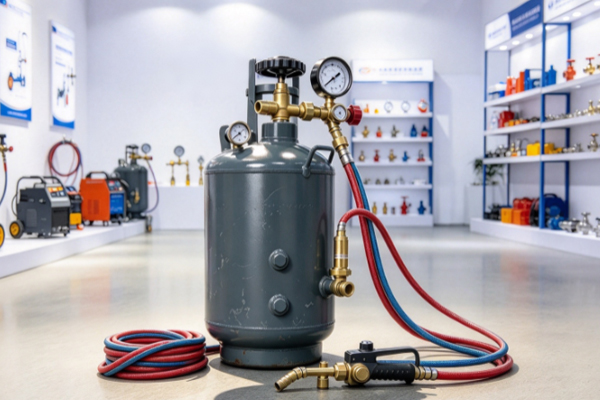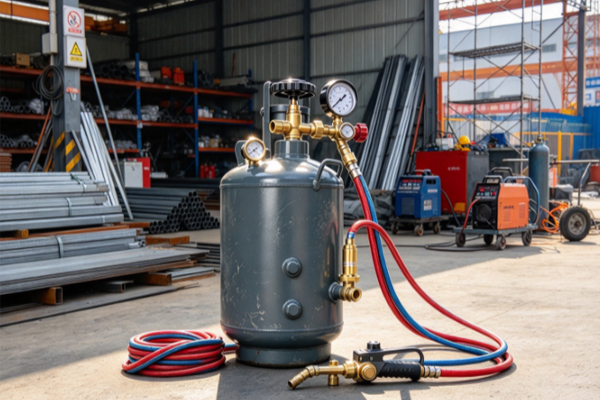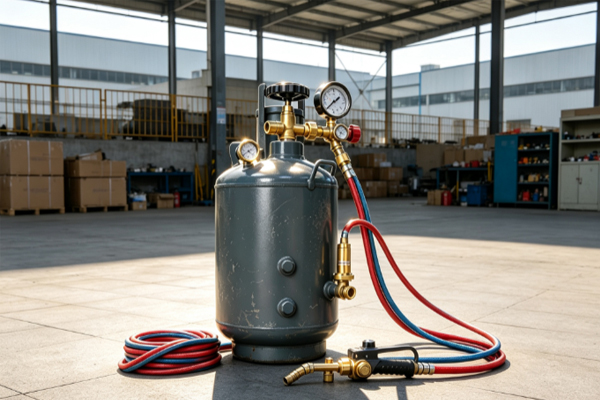
Industrial acetylene tanks are widely used in hardware processing, metal cutting, welding repair, and other scenarios, making them indispensable gas supply equipment in many production sites. Although the installation process may seem simple, it often involves judgment errors and operational deviations. If handled improperly, it may not only affect gas supply stability but also create hidden safety risks. Reviewing the common problems in acetylene tank installation helps enterprises avoid risks in advance, improve equipment operating efficiency, and ensure more stable and reliable use in the future.
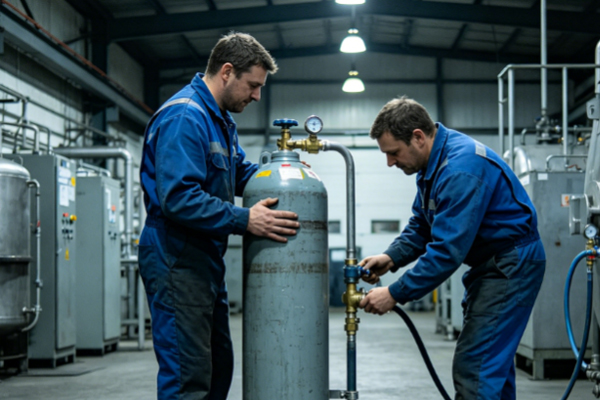
Incorrect Selection of Installation Environment
Whether the installation environment is suitable directly determines whether the acetylene tank can operate safely, yet this point is often overlooked on site.
Insufficient Ventilation
Some sites place acetylene tanks in enclosed or semi-enclosed areas where air circulation is poor and gas is difficult to disperse. Over time, this can gradually increase the safety pressure in the local environment.
- Gas tends to accumulate in localized areas, especially in narrow spaces with slow air exchange, making it easier to create an environment unfavorable for safe operation.
- Once the safety level of the working environment declines, operators face higher risks during daily use, and on-site management becomes more difficult.
- Long-term operation carries potential risks. If sparks, static electricity, or other external factors are introduced, accident hazards may be amplified.
Maintaining good ventilation is one of the basic requirements for acetylene tank installation and an important prerequisite for stable gas supply later on.
Too Close to Fire Sources or High-Temperature Areas
Some installation points are too close to welding sparks, heating equipment, or open flames, which can easily increase the level of danger. This kind of problem is not uncommon in actual construction.
- It increases the risk of combustion and flashback, especially in environments with frequent welding and cutting operations, where the safety boundary is more likely to be compressed.
- It affects stable equipment operation, as excessive temperature or nearby heat sources can make the equipment condition less stable.
- It does not meet industrial safety requirements. Such layout methods are not only unfavorable for on-site management but also increase later rectification costs.
Proper isolation from fire sources and high-temperature areas is an important measure to reduce the probability of accidents and must be considered a priority in acetylene tank installation.
Equipment Connection Errors
Once problems occur in the connection stage, they often directly affect gas supply performance and are among the more common mistakes during installation.
Poor Interface Sealing
Improper sealing treatment can cause hidden problems during system operation. These issues may not be obvious at first, but their impact will gradually increase over time.
- Minor gas leakage may occur. Although it may not be detected immediately, long-term accumulation will affect overall safety.
- It affects pressure output stability, and gas supply fluctuations directly interfere with the continuity and quality of welding and cutting operations.
- It increases safety hazards, especially in environments with high temperatures and frequent sparks, where the risk becomes even greater.
Properly handling interface sealing is an important step in ensuring normal system operation and a key part of installation acceptance that cannot be ignored.
Disorganized Pipeline Installation
A lack of planning in pipeline layout makes the entire gas supply system complex and difficult to maintain, and it also increases the difficulty of troubleshooting during later use.
- Too many crossed pipelines not only affect the neatness of the site but also make inspection and maintenance more troublesome.
- Pressure loss increases. When pipelines are too long or routed improperly, gas supply efficiency is significantly affected.
- Later maintenance becomes inconvenient. Once abnormalities occur, troubleshooting takes longer and production progress is affected.
A clear and reasonable pipeline structure helps improve overall operating efficiency and makes equipment maintenance smoother.
Equipment Commissioning and System Configuration Errors
If commissioning is not carried out properly, even a well-installed system may still reveal problems after being put into use.
Pressure Testing Not Performed
Some equipment is put into use immediately after installation without undergoing complete testing. Although this may seem to save time, it often leaves hidden risks behind.
- System hazards are difficult to detect in time, as some problems are not obvious at the beginning but gradually appear during operation.
- Initial operation tends to fluctuate significantly, and unstable pressure directly affects cutting and welding results.
- Safety risks increase accordingly. When the system condition is unclear, on-site operations lack reliable protection.
Pressure testing is an essential step in confirming system status. It cannot be omitted, nor can experience replace standardized testing.
Ignoring Leak Detection
If a full inspection is not carried out, small problems are easily overlooked. These seemingly minor details often lead to bigger troubles later.
- Minor leaks are difficult to notice, especially in noisy or busy working environments where they are more likely to be ignored.
- Equipment performance is affected over time, as continuous leakage reduces gas supply efficiency and increases equipment load.
- Safety accidents may be triggered. Once external fire sources or improper operations are involved, the consequences become more serious.
A standardized inspection process helps enterprises detect and handle problems in advance, ensuring the system is in a more stable state before being put into use.
Configuration Does Not Match Site Requirements
Some enterprises focus only on equipment price during selection and ignore actual working conditions. This often leads to unsatisfactory use later on.
- If capacity is too small, gas supply cannot keep up with production pace, easily causing interruptions and reduced efficiency.
- If configuration is too high, procurement and maintenance costs increase, resulting in wasted resources.
- Poor site adaptability affects user experience and prevents the equipment from fully realizing its advantages.
Only by configuring the system according to processing scale, number of workstations, and gas consumption intensity can the acetylene tank deliver greater value and better meet long-term enterprise needs.
Poor Installation Management and Error Comparison
In addition to technical mistakes, poor management also affects the performance of acetylene tanks.
Lack of Operating Standards
If the installation process does not have unified standards, different operators may use different methods, ultimately causing inconsistent installation quality across the same batch of equipment.
- Installation quality becomes unstable, and on-site execution is affected by differences in personnel experience.
- Inconsistent execution standards make it easy to simplify or omit steps that should be unified.
- Safety control becomes difficult to standardize, and management faces more challenges in later tracking.
Establishing standardized operating procedures helps improve overall stability and makes installation and use easier to manage.
Insufficient Post-Installation Maintenance
Many devices lack continuous management after installation. Problems often accumulate gradually, and by the time failures become obvious, the cost of handling them has already increased significantly.
- Without regular equipment inspections, many early abnormalities cannot be detected in time.
- Aging components are not replaced promptly, making minor issues more likely to develop into major failures.
- Risks continue to accumulate, and long-term lack of maintenance directly affects equipment lifespan.
Continuous maintenance is an important part of ensuring long-term stable operation of acetylene tanks and an effective way for enterprises to reduce overall costs.
Comparison of Common Errors
Although the types of errors in acetylene tank installation differ, their impact paths are relatively clear. Environmental issues mainly increase safety risks, connection problems often lead to unstable pressure, commissioning issues leave system hazards behind, and management issues shorten equipment service life. If enterprises can plan properly before installation, strictly follow standards during installation, and maintain continuous upkeep after use, they can significantly reduce failure rates and improve overall gas supply quality.
Common mistakes in acetylene tank installation are often concentrated in environmental assessment, connection standards, commissioning procedures, and management systems. As long as enterprises plan properly before installation, strictly implement standards during installation, and maintain continuous upkeep after use, they can significantly improve the safety and stability of the gas supply system and reduce potential risks in hardware processing and industrial production. Zhongcheng Gas Tank provides professional acetylene tank and gas supply system solutions to help enterprises build a safer and more reliable industrial working environment.