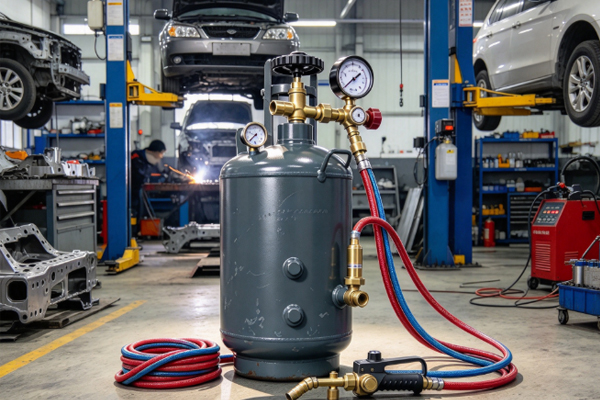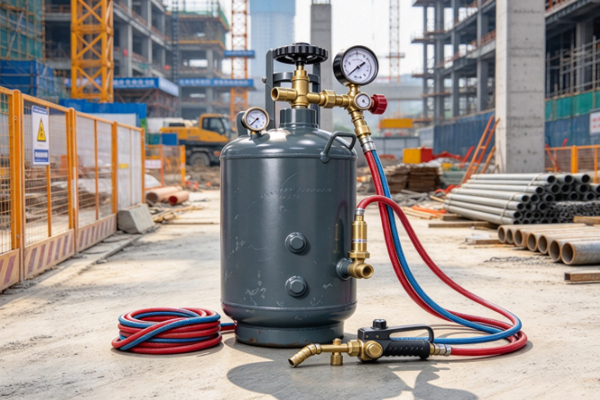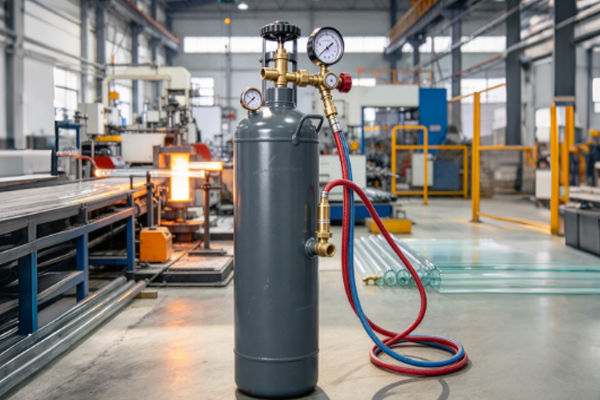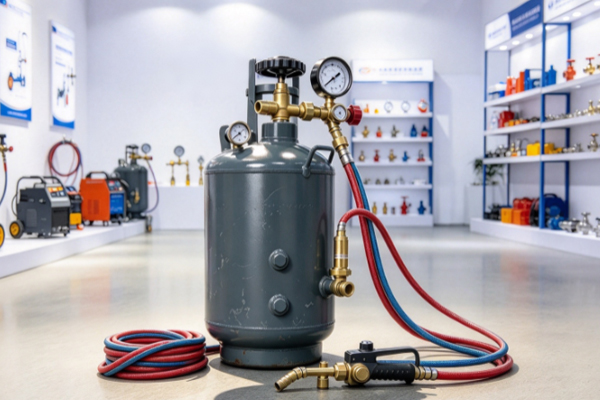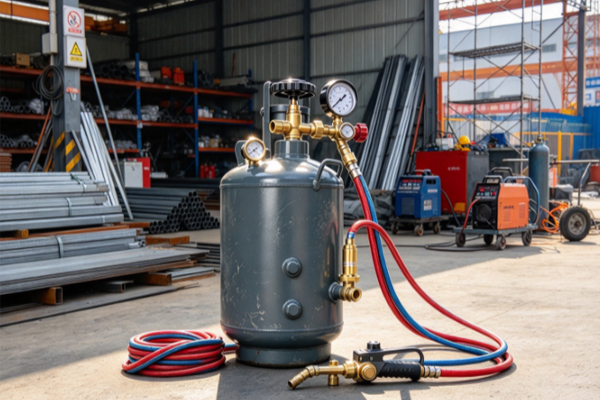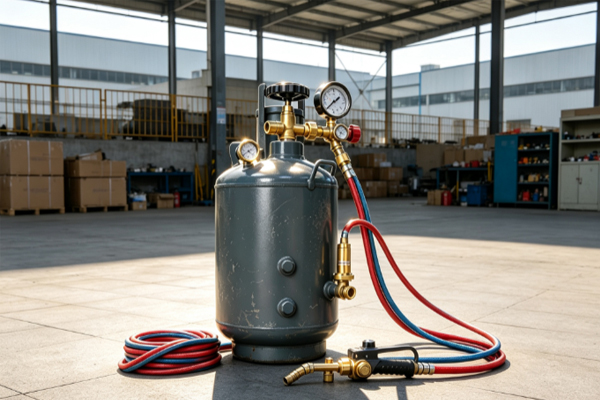
After an acetylene tank arrives on site, many companies focus on putting it into use as quickly as possible, while easily overlooking whether the installation space is reasonable. Once the site is arranged too tightly, valves become difficult to operate, piping becomes hard to lay out, and inspections are not easy to carry out. As a result, later management becomes passive. For acetylene tank installation, space is not just a place to put the equipment; it is also closely related to smooth operation, maintenance efficiency, and on-site management standards. Taking these details into account before installation can save a lot of trouble later.
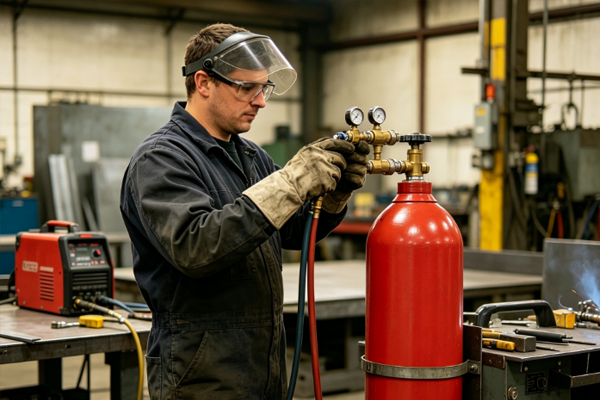
Insufficient installation space first affects the basic process
The amount of space available for installation directly determines how convenient the acetylene tank will be to use later. Many basic problems often start here.
Operating actions become restricted
If there is too little space around the acetylene tank, daily valve operation, instrument checks, and connection adjustments will all become inconvenient.
- Personnel have limited standing space, awkward operating posture, and reduced work efficiency.
- Valves, interfaces, and gauges are crowded together, making readings and adjustments inconvenient.
- If the site needs to be handled quickly, insufficient working space will slow down the response.
Once basic operations are restricted, companies will clearly feel the inconvenience from the very beginning of use.
Piping layout becomes more crowded
When installation space is insufficient, the piping route is often forced to be compressed, and the quality of acetylene equipment installation will also be affected.
- Excessive pipe bends make the layout less smooth and later inspections more difficult.
- If the distance between interfaces is too small, they may interfere with each other during maintenance.
- The area around the equipment looks messy, increasing the difficulty of on-site management.
Once the piping layout loses its margin, later maintenance and adjustments become more complicated, and the company’s management costs will also rise accordingly.
Ventilation and heat dissipation conditions worsen
If the installation space for the acetylene tank is too limited, air circulation around it will also be restricted.
- Air cannot circulate easily, making it harder to keep the surrounding environment stable.
- Once heat accumulates, both on-site comfort and management experience will decline.
- If ventilation conditions are insufficient, it becomes harder to meet the requirements for industrial gas equipment installation.
If ventilation and heat dissipation cannot keep up, it will be difficult to maintain an ideal environment around the equipment, so this must be considered in advance before installation.
The practical impact of insufficient space on enterprises
Space problems do not stop at the installation stage. Once the equipment is put into use, their impact on maintenance, safety, and production rhythm becomes even more obvious.
Maintenance efficiency declines
In a site with tight space, repair and inspection work will take more time.
- Tools cannot be extended properly, and disassembly and assembly actions become less smooth.
- Key parts are harder to see clearly, making troubleshooting more time-consuming.
- Maintenance personnel need to repeatedly adjust their position, disrupting the work rhythm.
Once maintenance efficiency declines, the company will need to invest more time and manpower in daily management, which is not cost-effective in the long run.
Safety management pressure increases
Acetylene tanks are equipment that require standardized management, and insufficient installation space makes on-site risks harder to control. Once the personnel activity area becomes smaller, operators are more likely to interfere with one another, and it becomes harder to move quickly when abnormal situations occur. If there is also clutter piled up on site, the difficulty of management will increase further, and the company will face greater pressure in daily inspections and emergency handling.
Production rhythm is easily disrupted
If there is not enough installation space, many problems will not appear immediately, but will become concentrated after the equipment has been running for a period of time.
- Temporary relocation of equipment will take up production time.
- Repairs, inspections, and verification may all affect the original schedule.
- Once the production site is frequently adjusted, overall coordination will slow down.
After the production rhythm is disrupted, the company must not only deal with equipment issues, but also reorganize on-site arrangements, which further amplifies the impact.
Space that should be reserved during acetylene tank installation
Leaving enough key space before installation is not only about making sure the equipment fits, but also about ensuring smoother future use, inspection, and emergency handling.
Reserve sufficient operating space
Among the requirements for acetylene tank installation, operating space is one of the most basic items.
- Enough distance should be left around valves, interfaces, and instruments.
- Personnel should be able to stand, bend, and observe conveniently.
- Common operating points must not be blocked by walls, pipelines, or other equipment.
The more sufficient the operating space is, the smoother the equipment will be to use later, and the easier it will be for the company to maintain standardized management.
Reserve inspection space properly
Inspection space should be reserved in advance so that personnel can enter the area around the equipment to check its condition, record information, and identify abnormalities. This also makes daily maintenance and regular inspections smoother and reduces management problems caused by limited space later on. If the inspection passage is too narrow, personnel movement and staying in place will both be affected, which can easily reduce inspection efficiency. Reserving enough inspection space also helps the company respond more quickly when problems are found.
Plan emergency space in advance
Emergency space is often overlooked, yet it has a major impact on on-site management.
- When equipment needs to be temporarily isolated, there must be enough room around it for action.
- When personnel handle abnormalities, they must be able to enter and leave quickly.
- When adjusting the site plan, buffer space must also be reserved.
Emergency space may seem like a backup condition, but in fact it is an important foundation for flexible on-site handling.
How enterprises can avoid insufficient installation space
To reduce rework and management pressure later, companies should move space-related issues to the installation preparation stage and identify risks in advance.
Conduct a site survey before installation
A pre-installation site survey can help companies identify space problems in advance.
- Check whether the site size matches the installation requirements of the acetylene tank.
- Check whether the passage is smooth and whether transportation and inspection will be affected.
- Check whether there are obstacles, storage areas, or other interfering factors nearby.
The more detailed the site survey is, the more likely the installation will be completed correctly the first time, reducing the risk of rework.
Develop an installation plan based on the usage scenario
Different companies have different production rhythms, so acetylene tank installation plans should not be copied directly.
- In scenarios with high usage frequency, more attention should be paid to operating and maintenance distances.
- For projects with complex sites, it is better to optimize the layout in advance.
- For companies with tight production schedules, hidden risks should be addressed before installation.
If the installation plan can be designed according to the actual scenario, the company’s later use will be more stable and better aligned with management needs.
Establish an acceptance checklist
Including space conditions in the acceptance checklist can make installation management more standardized.
- Operating distance, ventilation conditions, and inspection passages should all be confirmed item by item.
- The space reserved around the equipment for maintenance should be checked on site.
- With complete acceptance records, later management and responsibility tracing will be clearer.
The acceptance checklist is not only a tool for confirming installation results, but also an important basis for the company’s future management.
At first glance, the installation space for an acetylene tank may seem like just a site issue, but in reality it affects operating smoothness, inspection efficiency, emergency handling, and later maintenance. If a company verifies passages, ventilation, maintenance distances, and surrounding conditions before installation, management afterward will be much easier. Zhongcheng Gas Tank provides professional acetylene tank and industrial gas equipment solutions to help companies make installation and usage more reliable.