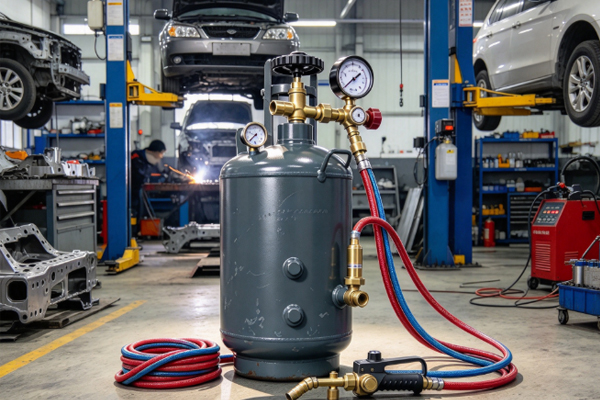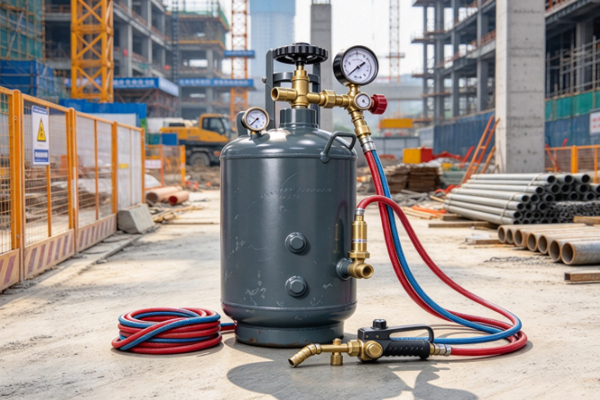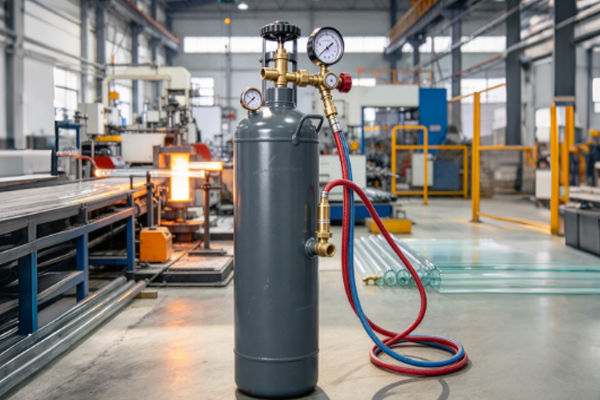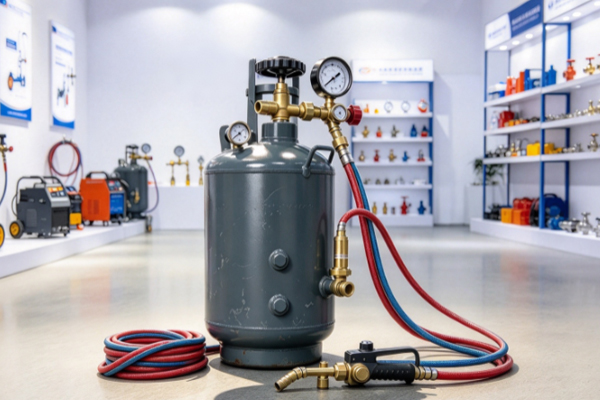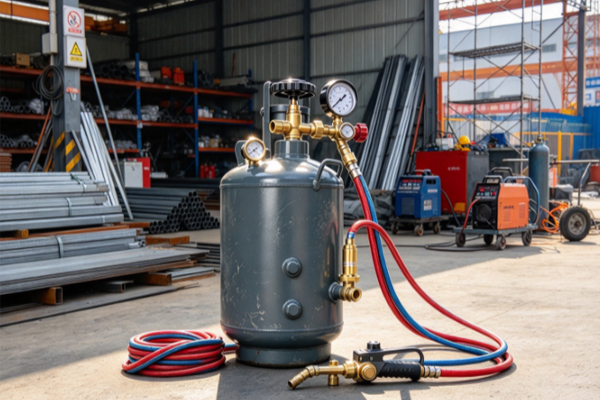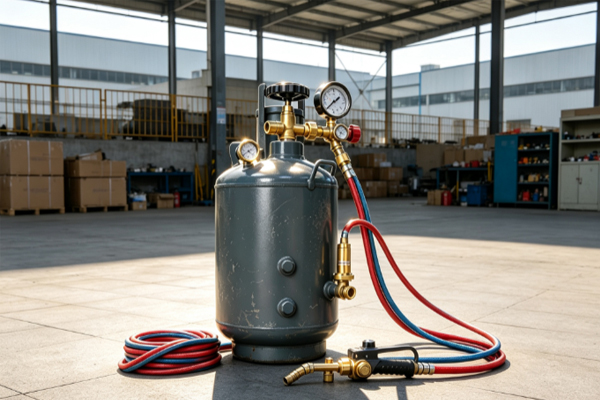
After an acetylene tank is put into on-site operation, companies often find that although the initial installation appears complete, day-to-day management is not as smooth as expected: the placement may not be ideal, on-site labeling may not be clear enough, records may not be fully retained, and even hidden issues that are difficult to notice may remain. When this happens, many managers care less about whether the problem exists and more about whether it can still be corrected and brought back on track. For industrial gas supply equipment such as acetylene tanks, whether a problem can be remedied does not depend on a simple yes-or-no judgment; it must be evaluated comprehensively based on the severity of the issue, the conditions for correction, and the company’s subsequent management capability. The earlier a problem is discovered, the greater the room for handling it, and the easier it is for the company to keep losses within an acceptable range.
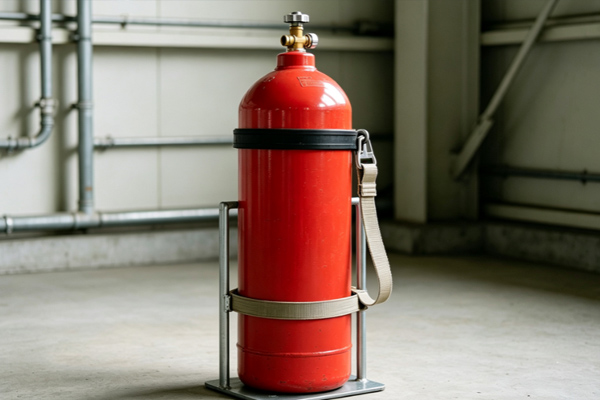
After Improper Acetylene Tank Installation, First Determine the Level of the Problem
When facing installation deviations, distinguishing between minor and major issues first will help avoid detours in later handling and prevent small problems that could have been solved from becoming a more complicated management burden.
Minor deviations usually still leave room for adjustment
Some installation issues do not immediately affect equipment operation, but they make on-site management less convenient. Over time, they can also affect the company’s judgment of equipment status.
- The equipment is not placed in a way that is convenient for inspection, so routine checks require detours or repeated confirmation, which takes more time for management personnel.
- The labeling information is not intuitive enough, making it easy for on-site staff to misunderstand equipment status, responsibility areas, and management requirements.
- Record archiving is not standardized, which significantly increases communication costs when tracing the installation process or verifying correction records later.
These situations usually do not require large-scale handling. After evaluation, they can often be gradually corrected through localized adjustments, allowing on-site order to return to a controllable state.
Problems that affect operational order should be analyzed separately
When installation deviations have already affected the pace of on-site work, the handling method can no longer remain at the surface level. It must be considered together with equipment operation and management processes.
- Equipment status is not stable enough, so on-site personnel frequently monitor abnormal changes, disrupting the original management rhythm.
- Management processes do not connect smoothly, and inspection, recording, feedback, and correction lack continuity, causing problems to circulate repeatedly across different stages.
- Maintenance operations are restricted. Once the equipment needs attention, the available on-site operating space is insufficient, and correction efficiency drops accordingly.
These issues may not immediately create serious consequences, but they continuously consume management resources. The longer they are delayed, the harder they become to handle, and they may trigger more chain reactions later.
Situations involving hidden risks must not be left unchecked
Once a problem touches the safety boundary, remediation can no longer rely on simple fixes. It must quickly enter a stage of professional review and risk assessment.
- Clear risk points on site indicate that the installation deviation is no longer just a management flaw, but something that may affect overall operational safety.
- Abnormal fluctuations in operating performance often mean the equipment status has deviated from the normal range and the source of the problem needs to be rechecked.
- Missing acceptance documents make later judgment less reliable and make the direction of correction unclear.
Such improper acetylene tank installation cases usually require professional review before a handling direction can be determined. They should not be judged solely by experience, and certainly should not continue to be used while the risk remains unclear.
Which Acetylene Tank Installation Problems Are Easier to Restore Through Correction?
Different types of problems have different levels of room for remediation. The direction of judgment should stay as close to the actual site conditions as possible, avoiding misjudging issues that could have been optimized as unsolvable difficulties.
Layout and labeling issues are more suitable for remediation
Many on-site problems do not lie in the equipment itself, but in basic management details. These issues are usually easier to restore through correction.
- An unreasonable equipment location makes inspection routes less smooth and management visibility unclear. After repositioning, on-site efficiency often improves significantly.
- Incomplete labeling information can easily cause operators to misread equipment status. Once supplemented and improved, management accuracy becomes higher.
- Unclear zoning makes responsibility boundaries vague. After redivision, daily management becomes more orderly.
After correction, these issues usually lead to a noticeable improvement in on-site order, and management efficiency rises accordingly, making future maintenance easier for the company.
Process-related management issues have greater room for optimization
Improper acetylene tank installation is sometimes not caused by major construction defects, but by weak follow-up management. As a result, a system that could have operated smoothly gradually becomes disorganized.
- An inconsistent inspection process makes problems discovered too late and feedback too slow, which also delays correction progress.
- Unclear responsibility division leads to mutual waiting when abnormalities occur, reducing handling efficiency.
- Unstandardized recording methods leave incomplete information for later review, making problem analysis more difficult.
Once the process is reorganized, many seemingly complicated issues become easier to handle, and the company can more easily establish stable management habits.
Insufficient configuration matching can also be reassessed
Inadequate early judgment often causes a mismatch between the equipment and on-site needs. This does not necessarily mean everything must be redone from scratch. In many cases, a more suitable handling plan can be found through reassessment. When the equipment does not align with the production rhythm, gas supply management becomes disconnected from actual use. After rematching, smooth operation is easier to restore. If the supporting management method is inconvenient, it means the current plan may not suit on-site habits. After adjustment, execution efficiency is usually higher. If insufficient space was reserved for later maintenance, inspection and servicing become inconvenient. After replanning, management pressure is significantly reduced. Through reassessment, many configuration issues can find more suitable solutions, avoiding repeated trouble and reducing additional investment during the correction process.
Which Situations Should Not Be Delayed Further?
Some problems may appear manageable on the surface, but in reality they keep amplifying future risks. If a company keeps waiting, remediation becomes increasingly difficult.
Abnormal signals appear repeatedly
If the equipment status remains unstable, it means the issue is no longer just “installation inconvenience,” but has already affected the system’s normal performance.
- Obvious fluctuations in operating performance indicate a lack of stability, forcing on-site personnel to spend more effort monitoring changes.
- Repeated abnormalities at connection points often mean certain links have not been properly addressed, and the problem may continue to recur.
- Difficulty maintaining on-site management shows that the original process can no longer support current operating needs and must be reorganized quickly.
The longer such situations are delayed, the more likely the risks are to expand, the more disrupted the correction pace becomes, and the higher the company’s management pressure and later handling costs will be.
Missing acceptance documents make remediation more complicated
Without complete acceptance records, later handling is often more passive. Many issues that could have been confirmed quickly become complicated due to the lack of evidence. During correction, it becomes difficult to accurately determine which parts need adjustment and which can be retained. Responsibility boundaries are unclear, communication costs rise, and correction progress is affected. Without acceptance evidence, the review stage also requires repeated confirmation, consuming time and energy continuously. If improper acetylene tank installation is combined with missing acceptance records, the company needs to complete the process as soon as possible to avoid repeated communication and duplicate handling, preventing a problem that could have been solved in one step from turning into multiple rounds of correction.
When on-site conditions are difficult to stabilize, action should be taken quickly
Some problems may not look serious on the surface, but they continuously affect on-site order. In environments with high management requirements, such issues should not be left unresolved for long.
- Frequent adjustments by management personnel indicate that the site has entered a state of constant patching and lacks a stable operating foundation.
- Difficulty maintaining consistent equipment status makes it hard for the company to establish a fixed management rhythm and also affects later judgment.
- Disruption to production arrangements shows that the issue has already begun affecting actual business and can no longer remain at the observation stage.
In such cases, delaying action only increases remediation costs. The earlier the company responds, the easier it is to keep the impact within a smaller range.
What Should Companies Focus on When Remedying Acetylene Tank Installation Problems?
Remediation is not a single-point fix. It is about reconnecting the problem, the process, and the acceptance workflow into a management loop that can be implemented, reviewed, and continuously executed.
Start with a professional review
Remediation is not just about making small repairs. It begins with assessing the risk level and clarifying exactly which stage the problem occurred in, so blind correction can be avoided.
- A qualified team conducting the review can identify the nature of the problem more accurately and reduce rework caused by misjudgment.
- Clarifying whether the issue lies in management, configuration, or hidden risk helps the company focus correction efforts on what truly needs to be addressed.
- Evaluating whether stable operation can be restored after correction helps the company decide whether further adjustment is worthwhile or whether a broader-scale change is needed.
The more detailed the professional review, the clearer the direction of later handling, and the easier it is to avoid repeated rework, making the correction process more efficient.
Then complete the correction loop
Finishing the correction does not mean the process is over. Closed-loop management is equally important. Only by keeping the process fully documented can later management become smoother.
- Recording the correction content helps later personnel understand how the issue was handled and makes it easier to compare during future inspections.
- Reviewing the handling results confirms whether the correction truly met expectations and avoids situations where the work appears complete but was not actually fixed.
- Retaining acceptance documents provides a basis for later management and reduces communication costs caused by unclear responsibility.
When the closed loop is complete, later acetylene tank management becomes easier, and the company is more likely to establish a stable process and reduce the recurrence of similar problems.
Establish a long-term management mechanism
The value of remediation lies not only in solving the immediate problem, but also in reducing future risks and shifting equipment management from passive response to proactive control.
- Regular equipment inspections help the company detect deviations earlier and prevent small issues from accumulating into major trouble.
- Unified management responsibility ensures that every stage is followed up by someone, reducing shirking and omissions.
- Continuous optimization of on-site processes helps equipment management better fit actual usage scenarios and improves overall operating efficiency.
The more stable the long-term mechanism is, the easier it is to control the impact of improper acetylene tank installation, and the more confidence the company will have in future operations.
Put “early detection” first
Many problems start as minor deviations. If they are delayed, they become major trouble. The earlier the company intervenes, the easier it is to reduce correction costs.
- Lower on-site adjustment costs mean early handling usually does not require large-scale reconstruction and can be implemented more flexibly.
- Lower management pressure means the problem has not yet spread across multiple stages and can be handled with more focused effort.
- Less impact on production helps the company complete corrections without disrupting the overall rhythm.
Keeping the problem under control at an early stage often makes later operations more stable and less stressful, helping the company find a better balance between safety and efficiency.
Improper acetylene tank installation does not mean there is no way to handle it. The key is to conduct a professional assessment as soon as possible and place risk, correction, and acceptance into the same process. The earlier a company pays attention, the more losses it can reduce, and the easier it is to restore the equipment to a stable state. Complete correction records and reinspection mechanisms also make later management clearer. For companies, every avoided rework means one more layer of stable production capacity and cost control. Zhongcheng Gas Tanks focuses on acetylene tank and industrial gas supply solutions, helping companies improve both safety and efficiency.