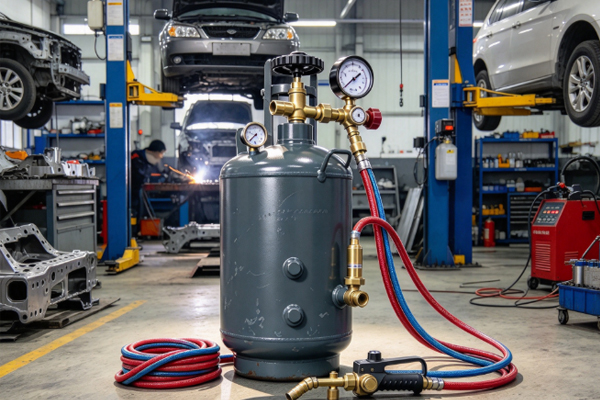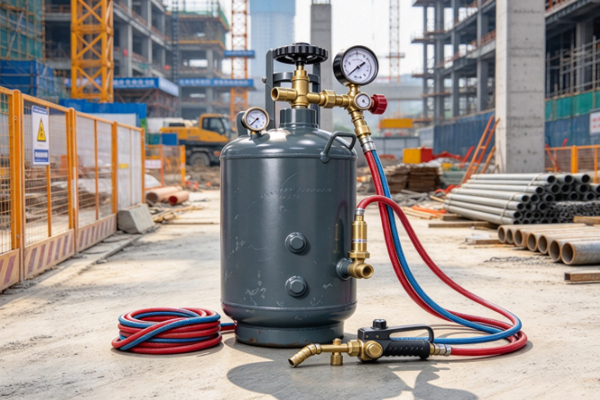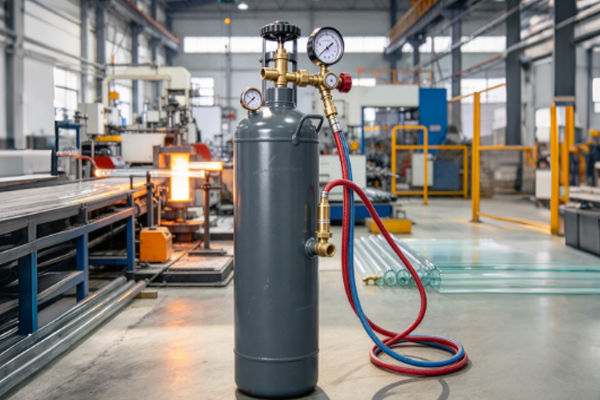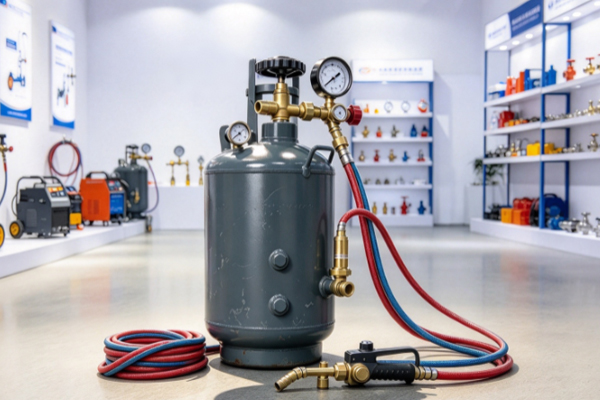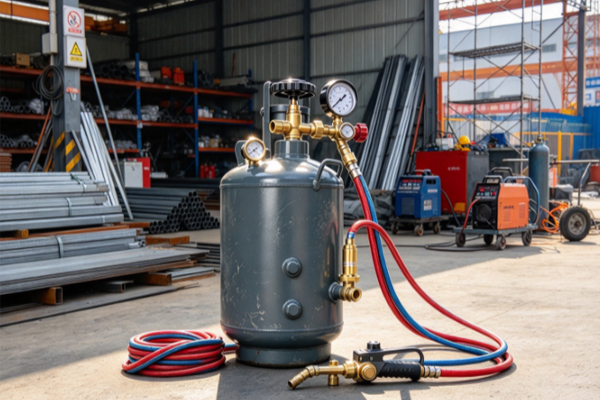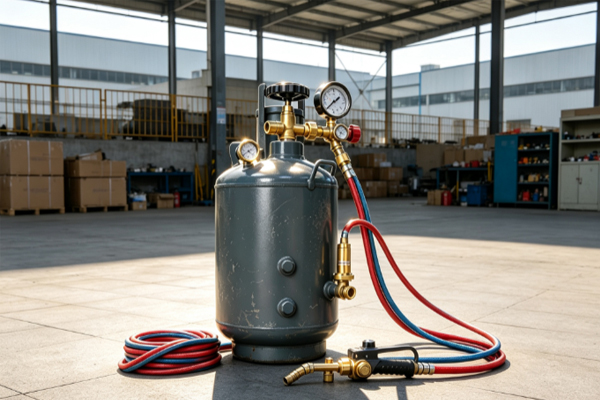
When buying an acetylene storage tank, replacing an old unit, or preparing equipment for installation, many people start with a simple question: “How big is this tank?” It may seem that measuring the height and diameter is enough, but in practice, it is easy to miss the connections, base, or top fittings. If the acetylene storage tank dimensions are incomplete or inaccurate, problems can appear during purchasing or installation. Taking a few extra minutes to record the key measurements can make quotation, transportation, and installation much easier.
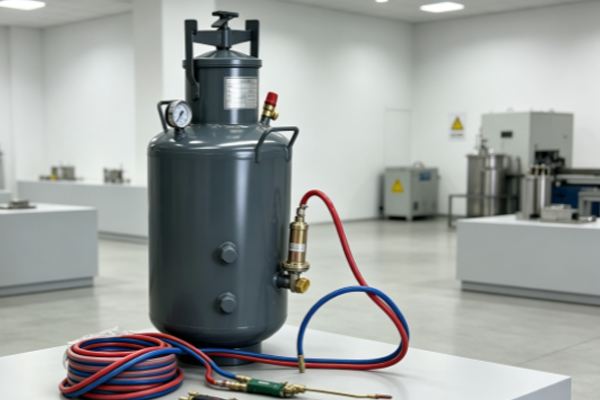
What Dimensions Should Be Measured on an Acetylene Storage Tank?
When measuring an existing tank, do not record only the “height × diameter.” If the equipment will be replaced or matched with other systems, it is better to record the following basic measurements at the same time.
- Tank outside diameter: Measure the widest part of the tank and record the actual outside diameter. If there is a protective cover, distinguish the tank diameter from the overall width of the protective structure.
- Overall height: Measure from the actual support point at the bottom to the highest point. If there are valves or pipe fittings on top, also record the maximum overall height.
- Base dimensions: Measure the length and width of the base, as well as the distance between mounting holes. These measurements are particularly important when replacing an existing tank.
- Connection locations and sizes: Record the positions and specifications of gas inlet, gas outlet, and other connections. This information will be useful when connecting the gas piping system.
After recording the measurements, it is also a good idea to take several photos of the entire tank and close-ups of the connections. When sending the information to a supplier, these photos can make it much easier to understand the actual equipment and acetylene storage tank dimensions.
How Can You Measure Acetylene Storage Tank Dimensions Accurately With a Tape Measure?
A standard tape measure is enough for many basic measurements, but the process should still be handled carefully. A slightly tilted tape or an unclear starting point can make the final dimensions inaccurate. Keep the tape straight and use the same measurement reference for each item.
- Keep the tape level when measuring the outside diameter instead of measuring at an angle across the widest part of the tank.
- Use a consistent reference point for height measurements. Decide whether the measurement starts from the ground or the tank base and ends at the tank top or the highest fitting. Record these measurements separately if necessary.
- Measure the circumference when the tank is too large. If it is difficult to measure the diameter directly, measure around the tank first and use the circumference to calculate an approximate outside diameter.
- Repeat important measurements once more, especially when the tank is large or the working space is limited and the tape is difficult to keep straight.
- Mark connection locations clearly. You can mark the position of each connection on a photo and note its distance from the top, bottom, or centerline of the tank.
If a new acetylene storage tank is being purchased, do not send only one simple dimension. Providing the outside diameter, overall height, connection details, base dimensions, and available installation space will make it easier for the supplier to recommend a suitable tank.
How Should You Read Acetylene Storage Tank Dimensions on Drawings and Specification Sheets?
When you receive an acetylene storage tank drawing or specification sheet, pay attention to the measurement references. Some documents list the dimensions of the tank itself, while others include the support frame, valves, or other accessories in the overall dimensions. If this distinction is missed, the two sets of data can easily be confused. When replacing an existing tank, also check the connection direction, mounting-hole spacing, and required installation space. The overall height is especially important when there are factory beams, door openings, or other height restrictions. For customized equipment, it is better to ask the supplier for a formal dimensional drawing and confirm the key measurements before production begins.
How Should You Confirm Dimensions When Purchasing an Acetylene Storage Tank?
If an existing tank is available, actual measurements are usually much more useful than a rough description. When requesting a quotation, send the dimensions, photos, and installation information together so the supplier can quickly evaluate whether the equipment will fit.
- For replacing an old tank: Provide the original tank height, outside diameter, base dimensions, and connection locations to help match the new equipment with the existing setup.
- For a new project: In addition to the tank dimensions, provide the available height, width, and transportation access so there is no surprise when the equipment arrives.
- For customized equipment: Give the supplier the actual site measurements and operating requirements and ask for a corresponding dimensional drawing.
- For piping modifications: Confirm the connection specifications and positions in advance. A tank may have the right overall dimensions but still create problems if the piping connections do not line up.
Once the dimensions have been confirmed, keep the final measurements and drawings for future reference. They can be useful for maintenance, replacement parts, or another equipment purchase later. Spending a few extra minutes on accurate measurements can save a lot of back-and-forth communication when the equipment arrives.
Measuring acetylene storage tank dimensions is not difficult. The important thing is not to leave out measurements that can affect installation and equipment matching. Height and outside diameter are only the basic dimensions. The base, connections, top fittings, and available installation space should also be recorded. When purchasing a new tank, providing the actual measurements, photos, and installation conditions, followed by confirmation of the final dimensional drawing with the supplier, is much more reliable than simply giving a rough description of the tank size. Accurate measurements make transportation, installation, and future use much smoother.