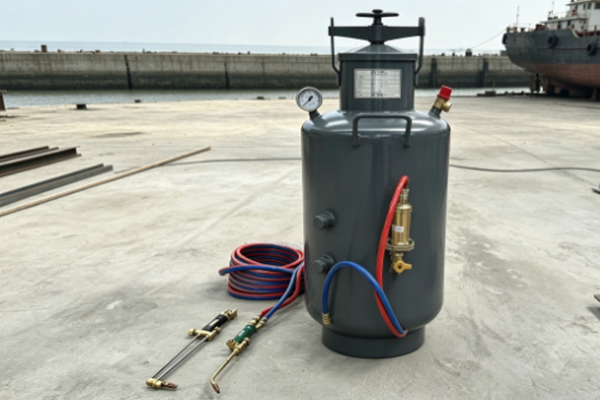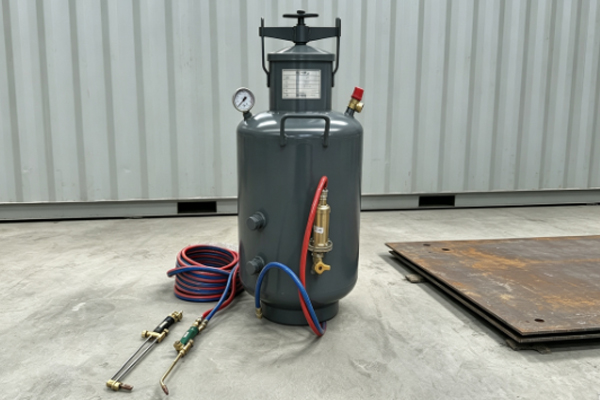
An acetylene tank may look similar to an ordinary gas storage tank, but its internal design is quite different. Why isn’t the inside simply an empty metal chamber? What materials are used inside, and how is acetylene stored and released? These details are closely related to equipment performance and can help buyers choose the right tank capacity, specifications, and application. For factories, metal cutting workshops, and construction projects, understanding the internal structure of an acetylene tank makes it easier to look beyond appearance and price when selecting equipment.
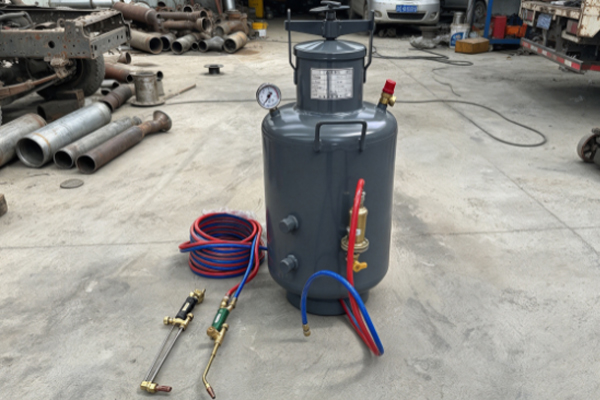
What Are the Main Internal Components of an Acetylene Tank?
A typical dissolved acetylene tank is not simply an empty metal container. Because acetylene can become unstable under certain conditions, conventional dissolved acetylene tanks use a combination of porous filler material and solvent to store acetylene in a dissolved state. The main components generally include:
- Tank shell: Provides structural strength and protection against internal pressure.
- Porous filler: Occupies the inside of the tank and provides space for the solvent.
- Solvent: Usually acetone or another solvent specified by the equipment design, which dissolves acetylene.
- Valve assembly: Controls the release and shutoff of acetylene gas.
- Fusible safety plug: Some models include temperature-responsive safety devices. The exact configuration depends on the product design.
These components are designed to work together. The tank shell, filler material, and solvent must be properly matched to meet storage and gas release requirements. When purchasing an acetylene tank, don’t focus only on its external size. Check its internal design and technical specifications as well.
What Is the Purpose of the Porous Filler Inside an Acetylene Tank?
Why does an acetylene tank need filler material instead of storing gas directly in an empty space? Porous filler is an important part of conventional dissolved acetylene tanks. It contains numerous tiny pores that hold the solvent and help distribute acetylene throughout the tank, reducing the risks associated with localized gas accumulation.
- Holds the solvent: Provides space for acetone or other specified solvents.
- Distributes gas: Helps acetylene remain evenly distributed inside the tank.
- Supports structural stability: The filler must meet the equipment design requirements and should never be replaced arbitrarily.
The condition of the filler can affect normal tank operation. If it becomes damaged, loose, or otherwise abnormal, equipment performance may be affected. Never open the tank, remove the filler, or add solvent yourself. These operations must be handled by qualified professionals in accordance with the equipment requirements.
How Does the Internal Structure Affect Acetylene Tank Capacity and Performance?
An acetylene tank’s capacity is not determined by its external dimensions alone. The tank’s internal volume, porous filler, solvent quantity, working pressure, and design specifications all affect its actual gas storage capacity. Buyers sometimes compare tanks simply by their listed capacity, but this can be misleading when their internal structures and product standards are different. External dimensions and nominal volume do not tell the whole story.
When comparing products, pay attention to the following details:
- Tank specifications: Check the nominal volume and external dimensions.
- Actual gas capacity: Refer to the product label and technical documentation.
- Valve connections: Make sure they are compatible with your existing gas supply lines.
- Operating conditions: Check the working pressure, application environment, and inspection requirements.
If your project requires continuous welding or cutting, or the worksite is far from an acetylene filling station, gas supply arrangements also need careful consideration. Traditional acetylene tanks are generally more flexible for short-term projects with low gas consumption and convenient access to filling stations. For long-term, continuous operations with higher gas demand, especially overseas infrastructure projects, a mobile acetylene generator may be worth considering.
What Is the Difference Between the Internal Structure of a Mobile Acetylene Generator and a Traditional Acetylene Tank?
A conventional dissolved acetylene tank stores gas using porous filler and solvent, while a mobile acetylene generator produces gas on-site. Their internal structures and operating principles are therefore quite different. The generator produces acetylene through a chemical reaction between calcium carbide and water, with an internal water-displacement mechanism controlling the process. When gas pressure rises, water is pushed into a separate storage tank, separating the water from the calcium carbide and stopping the reaction. When gas is consumed and the pressure drops, water returns to the reaction chamber and gas production resumes. This design is suitable for applications requiring a continuous on-site gas supply and can reduce the need to transport empty and full tanks repeatedly. For projects with high gas consumption, long operating periods, and no nearby filling stations, total operating costs may be reduced by approximately 40%–60% under suitable conditions. Actual savings depend on equipment investment, carbide prices, and maintenance expenses. Equipment selection should also account for site conditions and applicable safety requirements rather than relying on estimated savings alone.
Understanding the internal structure of an acetylene tank helps buyers make better decisions about storage capacity, gas supply methods, and actual operating requirements. We offer acetylene tanks in different specifications, as well as mobile acetylene generators for welding, cutting, and construction applications. If you are planning to purchase equipment, share your estimated gas consumption, project duration, order quantity, and destination port with us. We can recommend suitable product specifications based on your requirements and provide a quotation.