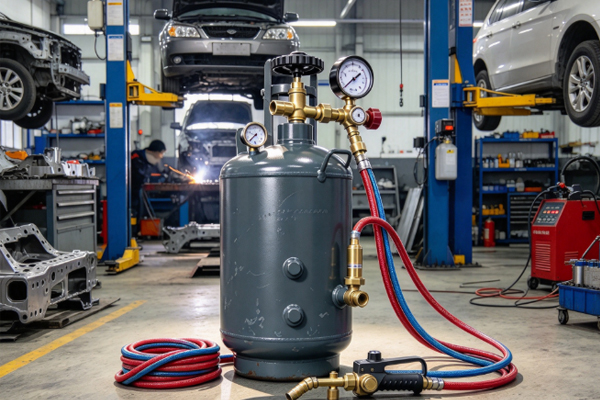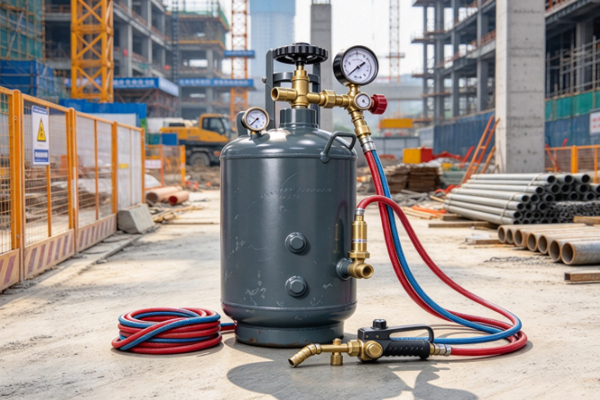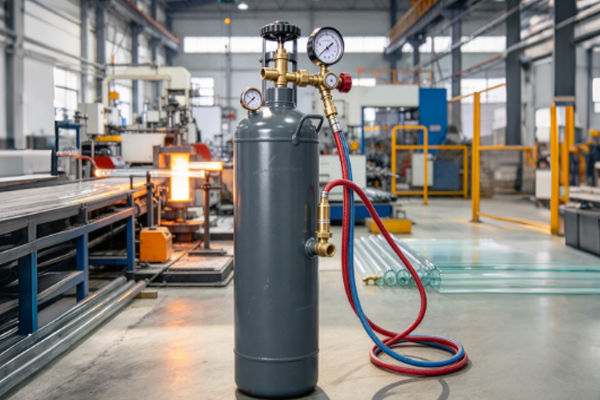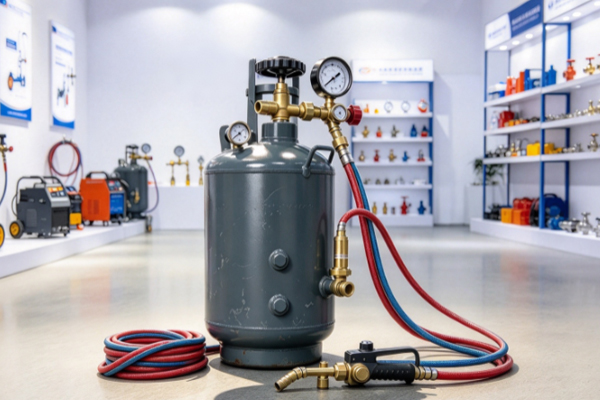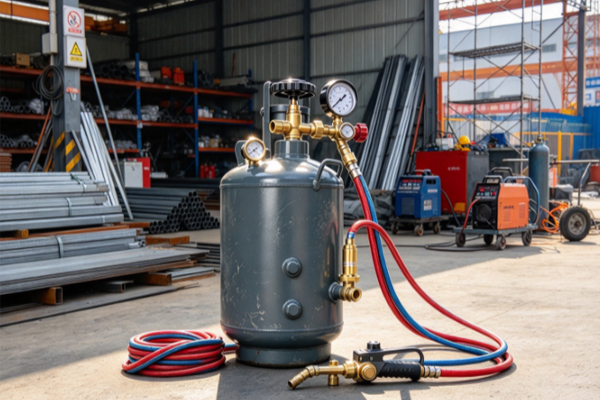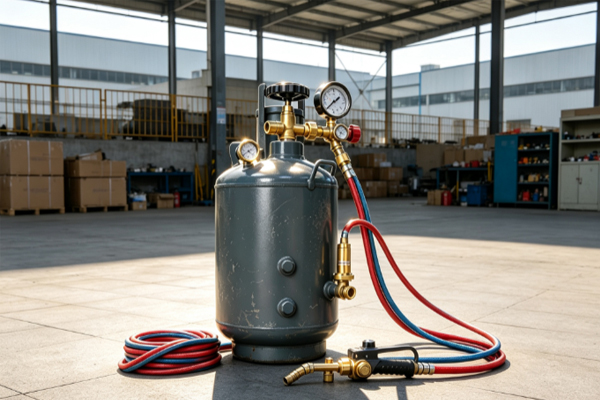
Acetylene tanks are used frequently in welding, cutting, and maintenance operations. Many factories focus their attention on equipment procurement while easily overlooking the installation stage. What seems like nothing more than connecting the tank body, piping, and accessories is actually closely tied to gas supply stability, operational safety, and future expenses. When installation is not done properly, problems often do not appear immediately. Instead, they gradually show up in rework, consumables, downtime, and maintenance. By the time production is affected, costs have already quietly accumulated. If you want an acetylene system to remain stable over the long term, installation quality must come first.
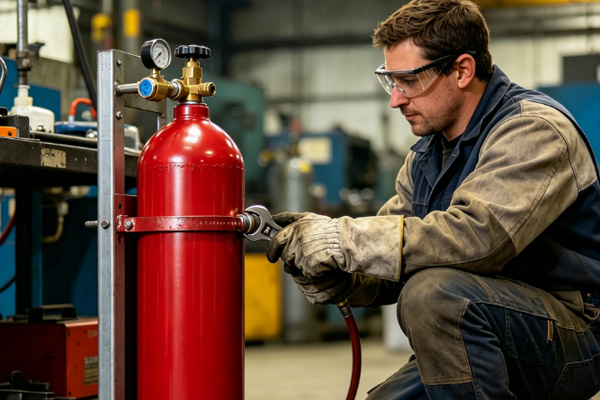
Improper Installation Will Directly Drive Up Costs
Details that are not handled properly during installation often turn into real expenses during later use.
Rework and Repair Costs Will Appear Immediately
Once installation deviations in an acetylene tank are exposed, the site usually has to be reprocessed. Work that could have been completed in one pass often turns into multiple rounds of dismantling, modification, supplementary installation, and reinspection.
- When the piping route is unreasonable, the site may need to redesign the line and remove the original connections, which significantly increases labor time and manpower input.
- When interface sealing is inadequate, inspection and leak correction rarely end in one step. Repeated troubleshooting will raise both material consumption and downtime.
- When accessory positions are incorrect, installation points often need to be replaced or readjusted, and the original components may also suffer additional wear.
These actions all bring labor, material, and shutdown costs. Work that should have been completed once may turn into multiple construction rounds, and expenses naturally keep rising.
Component Wear Will Increase Significantly
Poor installation conditions can also create uneven stress on parts. Many accessories are not of poor quality; they are simply consumed too early in an incorrect installation environment.
- When sealing rings are under uneven pressure for a long time, they are prone to deformation, hardening, and loss of elasticity, shortening their service life far beyond normal conditions.
- When valves are adjusted frequently, internal structures endure greater wear, and the originally stable opening and closing action may gradually become sluggish.
- When hoses are bent too much or fixed too loosely, the outer layer is more likely to age, crack, and develop localized fatigue, leading to a noticeable increase in replacement frequency.
As component replacement becomes more frequent, equipment maintenance budgets also rise, and the enterprise unknowingly bears more hidden expenses.
Installation Problems Will Push Up Long-Term Operating Costs
The impact of installation does not stop at the initial stage. Many costs will continue to grow during long-term operation and may even become part of the company’s daily expenses.
Gas Utilization Efficiency Will Decline
When the gas supply system is laid out improperly, gas transmission will suffer losses. On the surface, this may look like pressure fluctuations, but in reality it already affects efficiency. Longer piping causes more obvious pressure drop, too many joints increase the risk of leakage, and unstable pressure control makes it difficult to maintain a consistent output state, forcing operators to make frequent adjustments. As a result, not only is the day’s work affected, but gas consumption costs during long-term use will also rise significantly. The more equipment there is and the more frequently it is used, the larger the gap becomes.
Production Rhythm Will Be Disrupted
When acetylene supply is unstable, welding and cutting operations are more likely to encounter problems, and the production line rhythm will also be affected.
- When the flame state fluctuates, operators need to keep observing and adjusting, and the originally smooth workflow will be interrupted repeatedly.
- When cutting edges are uneven, the rework rate rises, and both material waste and repeated processing create additional expenses.
- When equipment inspection frequency increases, production schedules are easily interrupted, and originally planned delivery timelines may be delayed.
Once the production rhythm slows down, labor costs, time costs, and delivery pressure all rise together. The enterprise not only spends more, but may also miss better production windows.
Hidden Losses Are Harder to Track
Many expenses caused by improper installation do not appear on invoices, but they continue to consume enterprise resources and affect overall operating efficiency.
- When minor faults occur repeatedly, managers and maintenance personnel spend a great deal of time troubleshooting, and normal management work is squeezed out.
- When equipment conditions are unstable, product consistency declines, and quality fluctuations in batch processing make subsequent sorting and rework more frequent.
- When on-site staff spend more time diagnosing problems, time that could have been used for production is consumed instead, and overall efficiency drops accordingly.
These invisible losses often affect profit more than a single repair, especially in continuous production scenarios, where the impact becomes even more pronounced.
These Installation Details Are Most Likely to Cause Costs to Spiral
The places most likely to go wrong are often hidden in seemingly ordinary installation details. Many enterprises overlook cost control in these areas.
Unreasonable Piping Design
Piping is the “channel” of the acetylene system. Poor design directly affects gas supply stability. Too many bends increase flow resistance, causing pressure loss and flow fluctuations; overly long pipelines make it harder to maintain consistency at the end point; insufficient maintenance space raises future service difficulty, turning even simple inspections into complicated dismantling work. Proper piping planning is not only about neatness, but also about reducing future expenses and making long-term operation more worry-free.
Inadequate Safety Accessory Configuration
Flashback arrestors, pressure regulators, pressure gauges, and similar accessories have a direct impact on system performance. Many operational abnormalities can be traced back to these components.
- If the flashback arrestor is installed in the wrong direction, its protective function is weakened, and system safety will also decline under abnormal operating conditions.
- If the pressure regulator model does not match the application, pressure adjustment becomes difficult and gas supply stability is affected.
- If the pressure gauge is installed in a position that is hard to observe, abnormalities are difficult to detect in time, and many small issues can develop into major failures.
When accessories are installed correctly, the system runs more steadily, maintenance frequency decreases, and enterprise management becomes much easier later on.
Lack of Post-Installation Testing and Acceptance
Equipment being installed does not mean it can be put into long-term operation immediately. Testing and acceptance are key steps that keep risks from spreading.
- Without pressure testing, fluctuation problems may be overlooked, and abnormalities may only be discovered after formal use, when handling costs are higher.
- Without checking sealing conditions, leakage risks may remain, creating both gas loss and safety hazards.
- Without trial operation, abnormal points are difficult to expose in advance, and many problems can only be repaired while production is already underway.
When testing and acceptance are done carefully, the likelihood of later spending money on corrective measures drops significantly, and the stability of the equipment after commissioning is better guaranteed.
Proper Installation Can Bring Costs Down
If you want to reduce the overall cost of an acetylene system, the key is not only to install the equipment correctly, but also to manage both early planning and later maintenance well, so that every stage forms a closed loop.
Let a Professional Team Participate in Solution Design
Professional installation is not just construction. It is overall planning based on operating conditions, so the equipment starts in a more reasonable operating state.
- When the equipment location is determined according to the usage scenario, safety distance, operating convenience, and future maintenance space can all be considered, reducing later adjustments.
- When the piping route is designed according to actual demand, the transmission path can be shortened as much as possible and pressure loss reduced, making gas supply more stable.
- When suitable accessories and connection methods are selected, system compatibility improves and the failure rate later on becomes lower.
When the early-stage plan is detailed, rework later will be reduced. Every yuan invested during installation is also more likely to turn into long-term returns.
Complete the Acceptance Process Thoroughly
After installation is finished, the acceptance stage cannot be skipped. Many seemingly minor issues can only be discovered in time during acceptance.
- Checking whether connections are secure can help eliminate loosening and detachment risks in advance, preventing sudden failures after formal operation begins.
- Confirming whether pressure is stable can determine whether the pressure reduction and gas delivery conditions are normal, reducing the need for later adjustments.
- Observing whether the operating state is normal allows flame abnormalities, gas supply fluctuations, and accessory failures to be identified more intuitively.
The more standardized the acceptance process is, the lower the risk after commissioning, and the less likely the enterprise is to pay for installation mistakes later.
Establish a Continuous Maintenance Mechanism
Installation is only the beginning. Ongoing management is equally important. Only by making maintenance a routine practice can the equipment remain stable over the long term.
- Regularly checking the condition of sealing parts and hoses helps detect aging, cracks, and looseness early, preventing small hazards from growing.
- Timely replacement of aging components reduces sudden failures and downtime, keeping the equipment in a better working condition.
- Recording each inspection and adjustment provides a stronger basis for later troubleshooting and improves management efficiency.
When long-term maintenance is done well, equipment lasts longer and overall costs remain more controllable, making gas management much easier for the enterprise.
Improper acetylene tank installation does indeed cause enterprises to spend more on rework, consumables, downtime, and maintenance, and many of these expenses do not appear immediately. By the time problems accumulate, the impact has already spread into the production process. Only by linking installation standards, testing and acceptance, and daily maintenance into one complete workflow can long-term costs truly be reduced and the acetylene system remain stable. Zhongcheng Gas Tank provides professional acetylene tank and industrial gas supply solutions to help enterprises achieve safer, more stable, and more worry-free gas management.